Major historic floods

Major historic floods

27 June ? 2 July 2007
Gippsland
Flooding

Storms and strong winds caused widespread damage and flash flooding which resulted in major flooding across eastern Victoria. Major flood warnings were issued on 27 June for the areas of Boisdale, Stratford, Traralgon, Gleneldale, Bairnsdale and Glenmaggie. By 29 June, the Bureau of Meteorology had issued a total of 11 flood warnings across the Gippsland region including four major, five moderate and two minor warnings. Source: Emergency Management Australia


7 ? 24 June 2007
New South Wales East Coast
Storm and flood event

A severe storm which began on 7 June brought heavy rains and strong gale forced winds that caused widespread flooding and damage to the Central Coast around Wyong and Gosford, the Hunter including Newcastle, and the Sydney metropolitan areas. A natural disaster was declared on 8 June for the local government areas of Liverpool Plains, Upper Hunter, Gloucester, Dungog, Singleton, Muswellbrook, Maitland, Lake Macquarie, Wyong, Port Stephens, Newcastle, Gosford and Cessnock.

The declaration was extended on 14 June to include the local government areas of Great Lakes, Greater Taree, Hawkesbury, Mid-Western Regional, Warrumbungle and Gilgandra. The region was struck by two more severe weather events in the following two weeks causing further flooding and damage. Source: Emergency Management Australia


North East New South Wales / South East Queensland

Floods occur relatively frequently in some parts of Australia such as the northern rivers of New South Wales and the southern rivers of Queensland. As a consequence, the Richmond River at Lismore in northern New South Wales and others which have a long history of flooding have attracted significant investment of funds and resources for flood mitigation.


1998
Northern Territory
Katherine

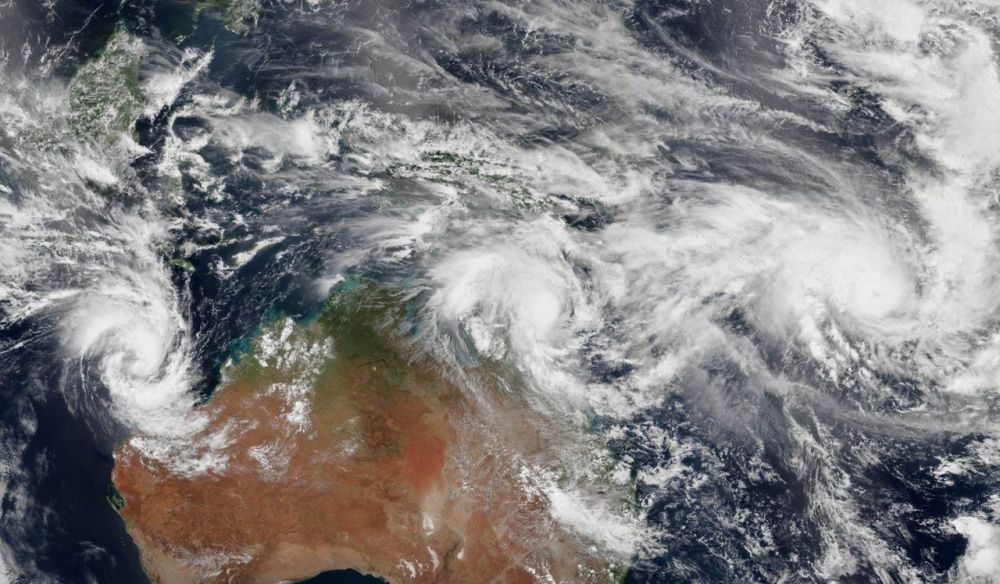
Three people drowned as record floodwaters from ex-tropical cyclone Les swamped Katherine and inundated 1,000 square kilometres in January 1998. The flooding resulted in Katherine's worst recorded flooding and eclipsed the previous highest levels recorded in March 1957. The event also triggered a state of emergency at Daly River as the floodwaters moved downstream. Source: Emergency Management Australia


1990
Eastern Australia
Charleville, Nyngan

The 1990 Great Floods were the worst that most of the affected areas had experienced with some centres, including the New South Wales town of Nyngan, receiving their highest rainfall on record. At their peak, flood waters inundated more than one million square kilometres of Queensland and New South Wales, an area larger than all of Germany. South east Victoria also was affected by severe flooding in a concurrent, but separate event. Source: Emergency Management Australia


1974
South East Queensland
Cyclone Wanda

Near record rainfall between 25-29 January 1974 associated with tropical cyclone Wanda, was a major contributing factor to the Brisbane River producing the most extensive flooding ever experienced in an Australian city. One third of the Brisbane metropolitan area covering approximately 40 suburbs was inundated forcing 9,000 people from their homes. During the event, 56 houses were swept away and another 1,600 at least were significantly submerged and seriously damaged while another 6,007 were flooded to some degree. Overall there were 13,000 buildings damaged or affected in some way in Brisbane, Ipswich and other towns along the river and many vehicles were damaged or destroyed. The floods resulted in 13 people being drowned and three others suffering fatal heart attacks while being evacuated in the Brisbane Ipswich region. At least another two were reported to have died in other parts of southern Queensland and northern New South Wales as a result of the floods. SSource: Emergency Management Australia


1955
New South Wales
Hunter Valley

Extreme flooding resulted in significant loss of life and property when almost every river system in New South Wales flooded. In the Hunter Valley around Singleton and Maitland 24 people died and 58 homes were destroyed or washed away, including 31 at Maitland. Overall, 5,200 homes were flooded, 2,180 of which were in Maitland where the Hunter River reached 11 metres. Another 1,250 homes were flooded in Singleton and 370 in Muswellbrook and 15,000 people were made temporarily homeless. Hundreds of vehicles also were damaged and roads, railways and bridges were destroyed. More than 40,000 people were evacuated from 40 towns in the region. Source: Emergency Management Australia


1929
Tasmania
Launceston

Heavy rainfall and flooding occurred throughout the Derby and Ulverstone areas in Launceston as well as the areas in the north west and north east of Tasmania. Rainfall registrations of 250 millimetres over 48 hours and gale force winds destroyed buildings and roads and damaged farmland causing flooding and stock losses as far south as the Hobart-New Norfolk areas. Source: Emergency Management Australia


1916
Queensland
Clermont

On 27 December 1916, a tropical cyclone tore through the Whitsunday Passage. Flooding caused by cyclonic rains, washed away much of Clermont south west of Mackay, in central Queensland. A total of 65 lives were lost in the floods.Source: Emergency Management Australia


1893
Queensland
Brisbane

Disastrous floods in the Brisbane River resulted in water levels of almost 2.5 metres in Edward Street at the Courier Mail Newspaper building. Numerous houses were washed away in Ipswich and Brisbane and the lower part of South Brisbane was submerged completely. The north end of the Victoria Bridge also was destroyed. The flood rose more than seven metres above the mean spring tides and three metres above the previous high flood mark of 1890.Source: Emergency Management Australia


1852
New South Wales
Gundagai

In June on the Murrumbidgee River, extreme floods swept through most of Gundagai and the surrounding countryside, leaving only three houses standing. A total of 89 people died in the event representing 36% of the town's population of 250. As a result of the flood, the entire town was relocated to a higher and safer position off the floodplain. Source: Emergency Management Australia


For more information contact: naturalhazards@ga.gov.au

Contact:

Updated: 06 August 2008