Australian Mineral Exploration Review reveals steady investment and changing commodity focus
Page last updated:3 August 2026
Geoscience Australia has released the latest Australian Mineral Exploration Review (AMER), providing an overview of mineral exploration activity across Australia in 2025 and the trends influencing potential future mineral supply, including critical minerals.
AMER 2025 shows that Australia’s total mineral exploration expenditure remained steady compared with 2024, increasing by 0.2 per cent to $3.9 billion, while spending shifted across key commodities.
Gold was a major focus during the year. Gold exploration expenditure increased by 34 per cent and accounted for 40 per cent of total mineral exploration expenditure in 2025. Silver-lead-zinc exploration expenditure also increased, rising by 20 per cent from 2024.
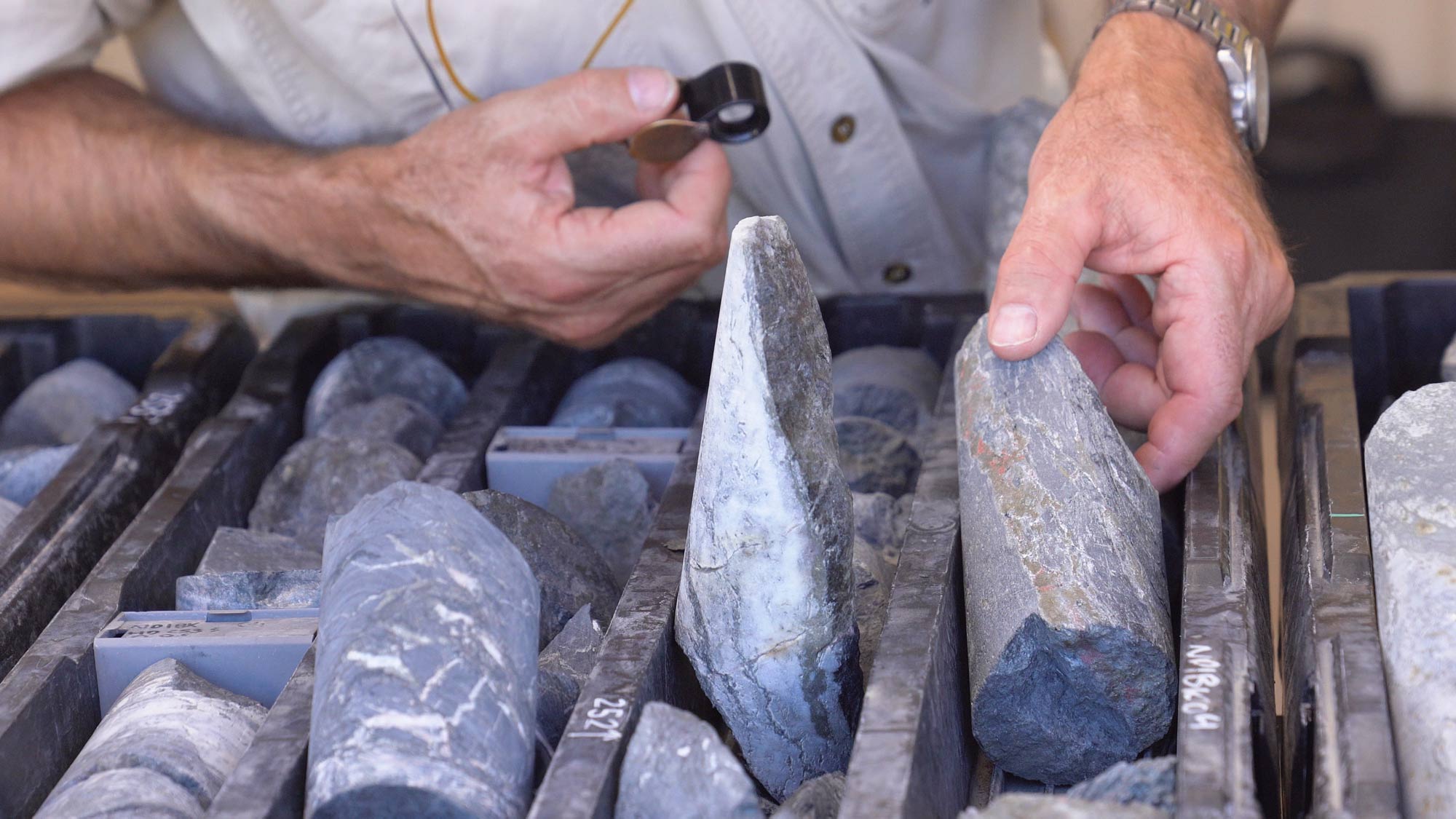
Exploration drilling allows geoscientists to access and study rocks beneath the Earth’s surface, helping them understand both the rocks themselves and the mineralisation systems they host. This understanding provides evidence for where further drilling campaigns should concentrate for the best possibility to intercept mineralisation. Core from diamond drilling preserves a continuous and undisturbed record of subsurface rocks, allowing geoscientists to directly observe geological structures and mineralisation in their true context. Image by Michael O’Rourke, Geoscience Australia.
While critical mineral exploration expenditure declined compared with 2024, the sector remained active. Critical minerals were reported in 32 maiden Mineral Resource discoveries during 2025.
Minerals prioritised for the Australian Government’s Critical Minerals Strategic Reserve were among the maiden Mineral Resources announced during the year. Australia’s known resources of gallium increased by 467 per cent from 2024, antimony increased by 40 per cent and rare earth elements increased by 8 per cent.
The review highlights the relationship between continued exploration, resource definition and potential future mineral supply. The discovery of new critical mineral deposits in established mining districts and frontier regions of northern Australia also demonstrates potential investment opportunities.
Australian Government policies and strategies, including the Critical Minerals Strategy, and investment in precompetitive geoscience through Geoscience Australia’s 35-year Resourcing Australia’s Prosperity initiative are supporting exploration for critical minerals, strategic materials and other resources.
Understanding which mineral commodities are being explored for and discovered helps governments, industry, investors and researchers make informed decisions. This includes decisions about regional development, processing opportunities and infrastructure investment, such as roads and railways that may be needed to support future mining developments.
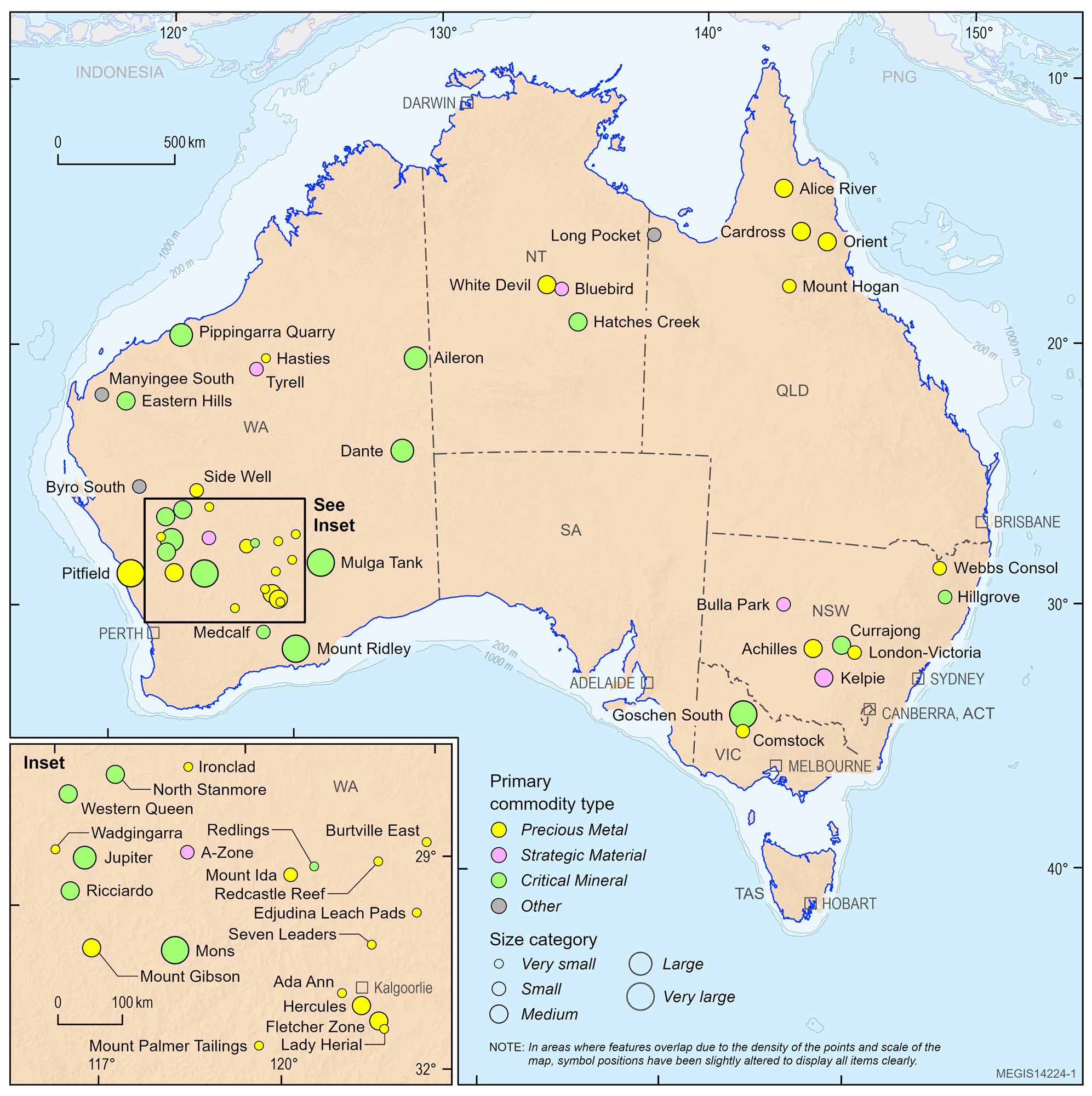
Location of maiden Mineral Resources in Australia in 2025 by project. The 69 maiden resource announcements from 50 projects were reported in 2025. Projects are coloured according to the primary commodity type of the project as described by the company. Symbol size indicated the project size category, classified using the mineral deposit size framework described by Cassard et al. (2015). The inset highlights the concentration of 2025 Maiden Mineral Resources in the Yilgarn region of Western Australia.
For the first time, users can download the full AMER report as well as the data presented in its tables and maps.
Kristina Anastasi, Head of Geoscience Australia’s Resource Insights Branch, said this was an important step in providing easy access to and use of Geoscience Australia’s resource data.
‘This new digital format puts users at the centre allowing them to perform further analysis by adding the data to their own datasets and enabling spatial analysis via GIS software or platforms such as the Digital Atlas of Australia,’ Kristina said.
‘By making the data more accessible and usable, we are helping governments, industry, investors and researchers better understand exploration trends and apply those insights to their own priorities and decision-making processes.’
AMER has been published annually since 2009. It draws on data from the Australian Bureau of Statistics and publicly available company reports to provide an overview of Australia’s minerals exploration sector, including exploration expenditure, explored-for commodities and newly discovered or maiden deposits.
Download the Australian Mineral Exploration Review 2025 for detailed insights.