About Historical Aerial Photography
See how Australia's landscapes have changed over time through more than 1.3 million historical aerial photographs held by Geoscience Australia.
Page last updated:4 November 2026
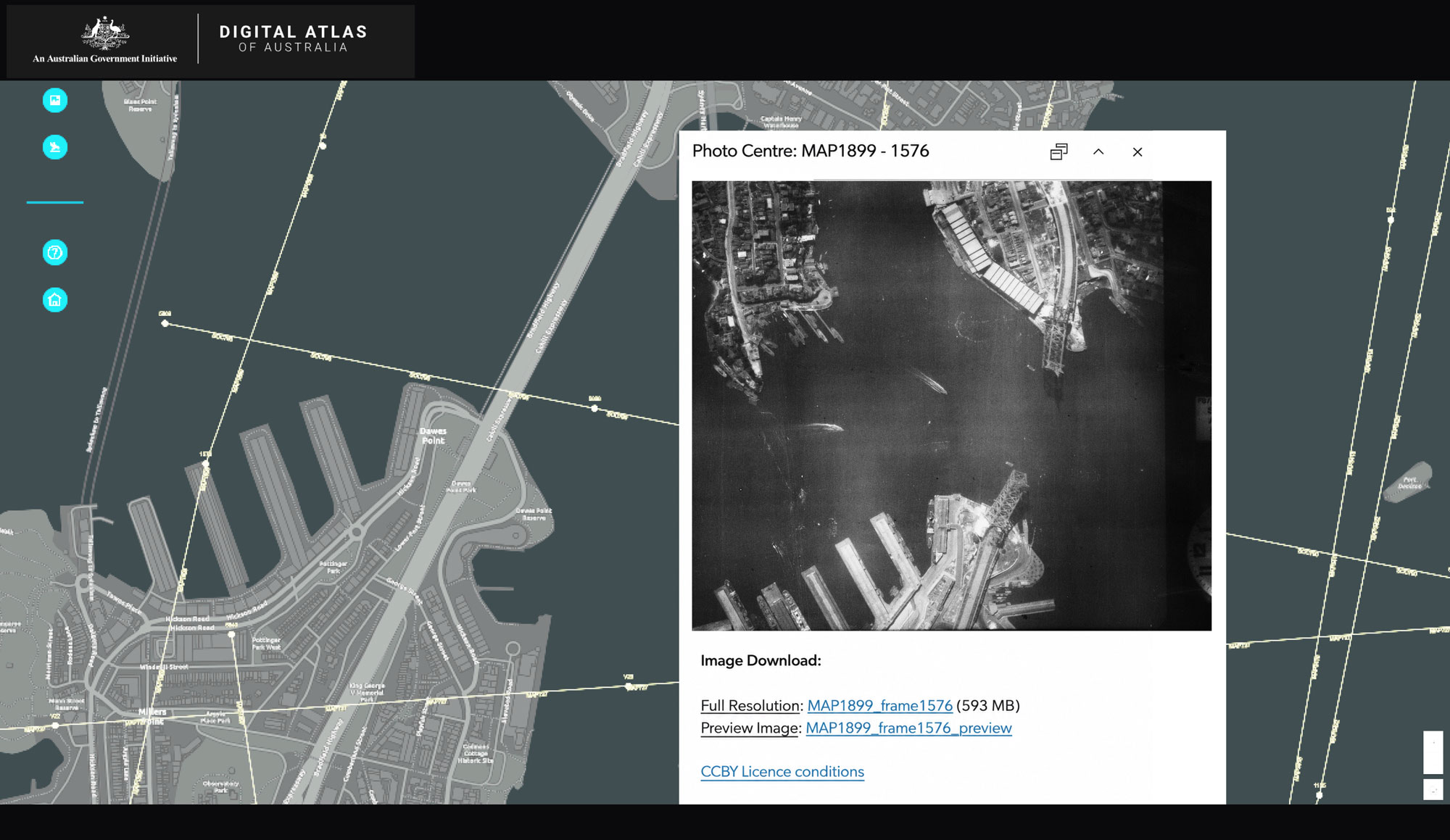
See Australia’s past from above
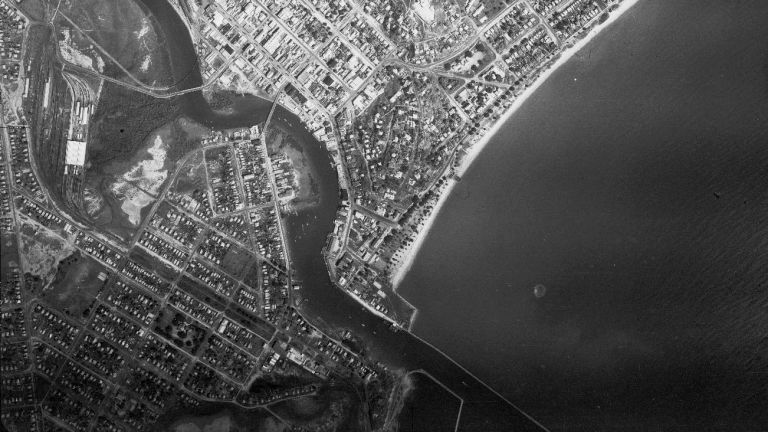
Geoscience Australia's Historical Aerial Photography (HAP) collection brings together more than 1.3 million vertical and oblique aerial photographs, captured between 1928 and 1996.
Together, these photographs provide a unique record of how Australia's towns, cities, coastlines, landscapes and environments have changed over time. The collection forms an important part of Australia's Commonwealth historic spatial information.
Thanks to many years of collaboration with the National Archives of Australia, our collection has been digitised and is made freely available for search and download via the Digital Atlas of Australia.
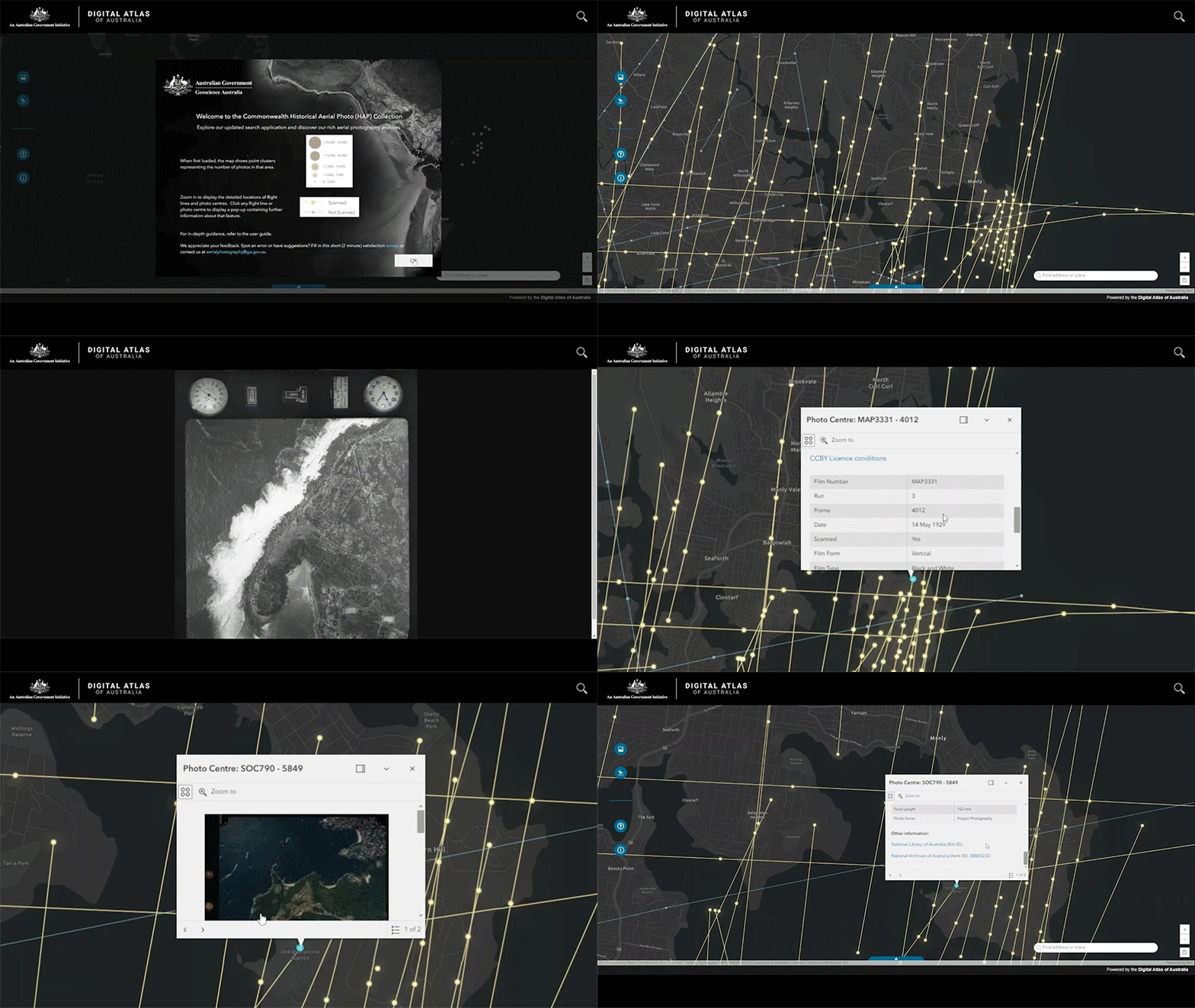
A unique view of landscape change
Historical aerial photography can show changes that are difficult to see with modern maps and imagery alone. By comparing photographs taken at different times, users can identify and understand:
- the growth of towns and cities
- changes in land use and farming practices
- shifts in coastlines and coastal landscapes
- changes in the natural environment, including vegetation cover.
Governments, organisations and individuals across Australia use historical aerial photography to support research, planning, archaeology, environmental management and other work that relies on understanding how landscapes have changed over time.
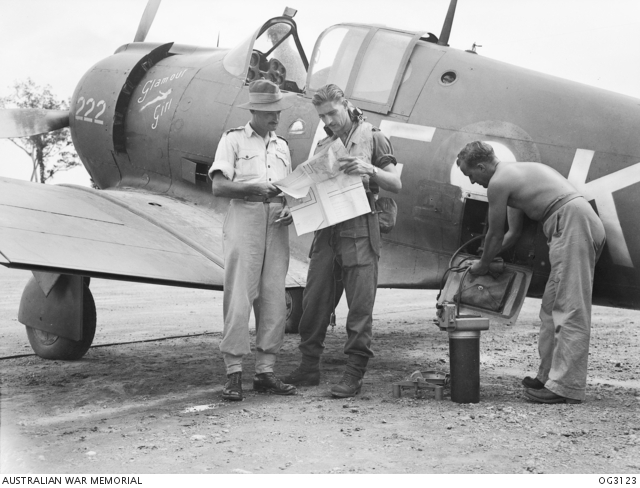
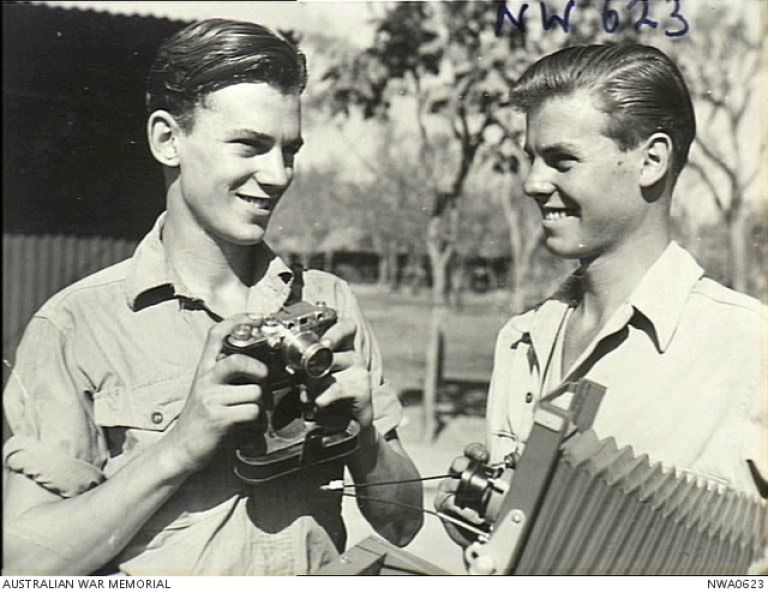
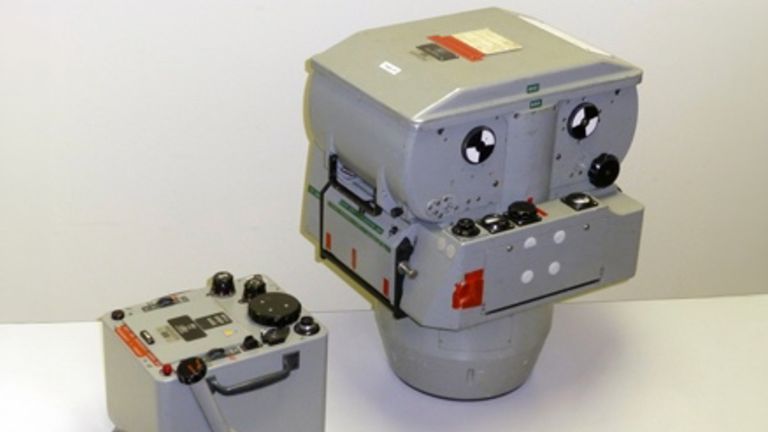
Aerial reconnaissance played an important role in World War II, accelerating advances in aerial photography technology. Images courtesy of the Australian War Memorial.
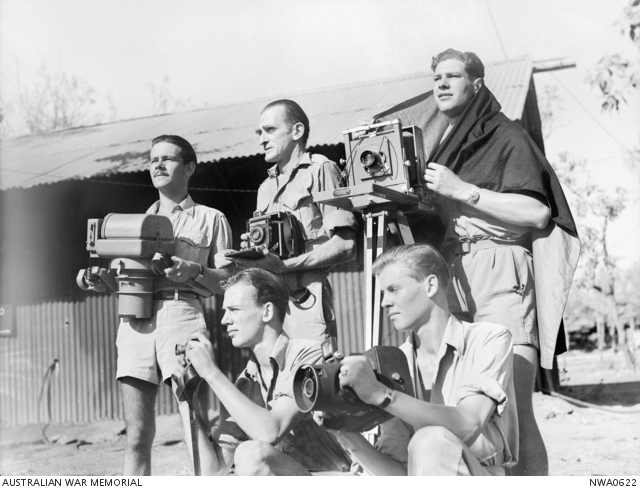
Aerial survey team with cameras and mapping equipment during a field photography operation. Image courtesy of the Australian War Memorial
How a national record was built from the air
Australia’s aerial photography program began in the 1920s, as new aviation and camera technologies enabled aerial surveys for mapping and investigation. Through the 1930s, photography expanded for mapping, land surveys, resource exploration and scientific research. During World War II, large areas were photographed for mapping, intelligence and defence.
After the war, aerial photography became the principal tool for topographic mapping, with state agencies and commercial operators undertaking extensive surveys. Today it remains an important source of information about Australia’s landscape, increasingly complemented by satellite imagery.
Learn more about our historical aerial photography
Geoscience Australia’s Aerial Photography Hub provides detailed information about our collection of images, including guidance for finding and using historical aerial photography, frequently asked questions and other resources.
Preserving Australia’s historic information
Much of Australia's historical aerial photography was captured on film, making it a unique but fragile record of the past. Since 2011 Geoscience Australia has been working with the National Archives of Australia to digitise the physical aerial photography collection, and this work is ongoing.
Digitisation helps preserve these irreplaceable records while making them easier to discover and use.
Transforming and curating more than 1.3 million images is a fascinating example of old technology meeting new, combining specialist skills in archival curation, geospatial data management, metadata and modern digital platforms.
Order professional prints from our collection
The service provider to the Australian Government for historical aerial photography film scanning services is United Photo & Graphics.
For professional prints and digital images contact:
Email: images@unitedphoto.com.au
Phone: 0491 204 991
121 Condon St, Kennington, Victoria 3550
How to credit photographs
If using the photography, you must give attribution to: © Commonwealth of Australia (Geoscience Australia) [year of publication].
Learn more
We appreciate your feedback. Spot an error or have suggestions? Take this short survey or contact us at aerialphotography@ga.gov.au.
Discover the story of historical aerial photography in Australia in our StoryMap — an exploration through maps and images.
Learn about the journey our team took to transform millions of aerial survey films into digital downloads.