Hazards and Impacts Storms from the Sun: Safeguarding Australia from space weather
Our geomagnetism network monitors space weather to identify storms and protect infrastructure.
During a G5 storm in January 2026, observatories captured electric fields 80 times greater than normal solar-quiet conditions, helping to minimise disruption to power grids, navigation and communications.
Published:17 November 2026
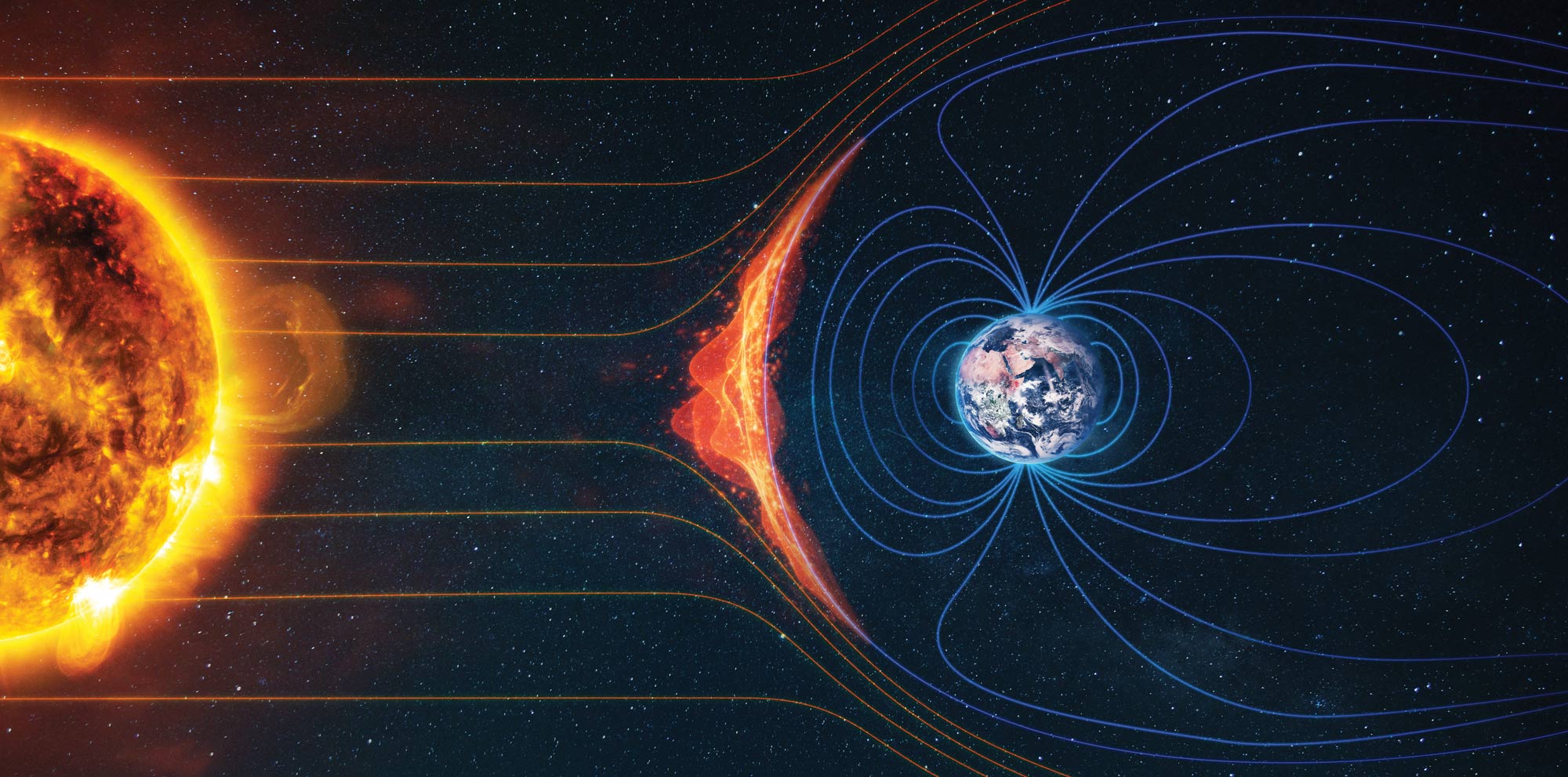
Protecting infrastructure from solar storms
Although invisible to most Australians, Earth's magnetic field underpins activities ranging from maritime and aviation navigation to mineral exploration and infrastructure management. Our geomagnetism program provides the national capability that supports magnetic navigation, improves understanding of space weather risks and delivers the reference framework used in magnetic surveying. Space weather can affect Earth’s upper atmosphere, satellites, power grids, GPS and radio communications.
In January 2026, our geomagnetic observatory network recorded a rare G5-level geomagnetic storm – the highest category on the scale – which was triggered by a major solar flare and coronal mass ejection. The event produced a maximum K-index of 9 at both Canberra and Gingin observatories, while the Canberra geoelectric observatory recorded induced electric fields almost 80 times greater than normal solar-quiet conditions. Auroras were visible across southern Australia.
These observations do more than record space weather. They help quantify the impacts of geomagnetically induced currents on critical infrastructure such as electricity transmission networks and buried pipelines, informing risk management and resilience planning. The data also supports safe compass-based navigation, a requirement under international maritime and aviation safety frameworks, and provides the geomagnetic reference framework that underpins airborne and ground-based magnetic surveys used in mineral exploration.
By maintaining national geomagnetic observatories and delivering trusted measurements of Earth’s magnetic field, we help Australia better understand space weather risks, support critical industries and protect essential infrastructure.
Related information
- Learn more: Space weather
Every second counts
our geomagnetic observatories record changes in Earth's magnetic field second by second
10 geomagnetic observatories
across Australia, Antarctica, Macquarie Island and the Cocos Islands
Discover more

Our highlights
Across the year, our people have delivered a wide range of outcomes that addressed some of Australia's most significant opportunities and challenges.
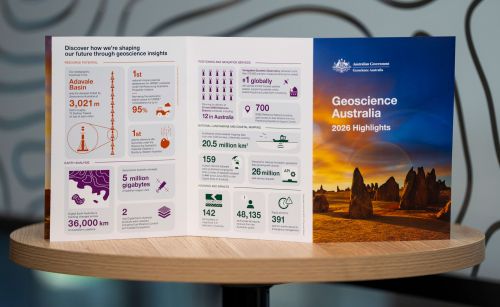
Highlights at a glance
The highlights included in this annual snapshot showcase just some of the diverse and impactful work that has created value for Australia through trusted science, data and insights during 2026.

Message from the CEO
Geoscience Australia and our predecessors have always played a central role in leading applied geoscience knowledge that underpins the safety, resilience and prosperity of our nation.