From beneath the ground to powering our modern technology
Page last updated:14 September 2026
From deposit to device: the journey of a critical mineral
Most of us have held quartz without thinking twice about it. It's the second most common mineral on Earth, found in everything from beach sand to backyard garden rocks, but a special version of quartz is quietly becoming a highly sought-after material. You know all those silicone chips that drive everything from your smartphone to your washing machine? They started life as quartz. Join us as we trace the journey of high-purity silica from deposit to powering the modern technologies we use every day.
Critical mineral journey: Found -> Extracted -> Purified -> Powering
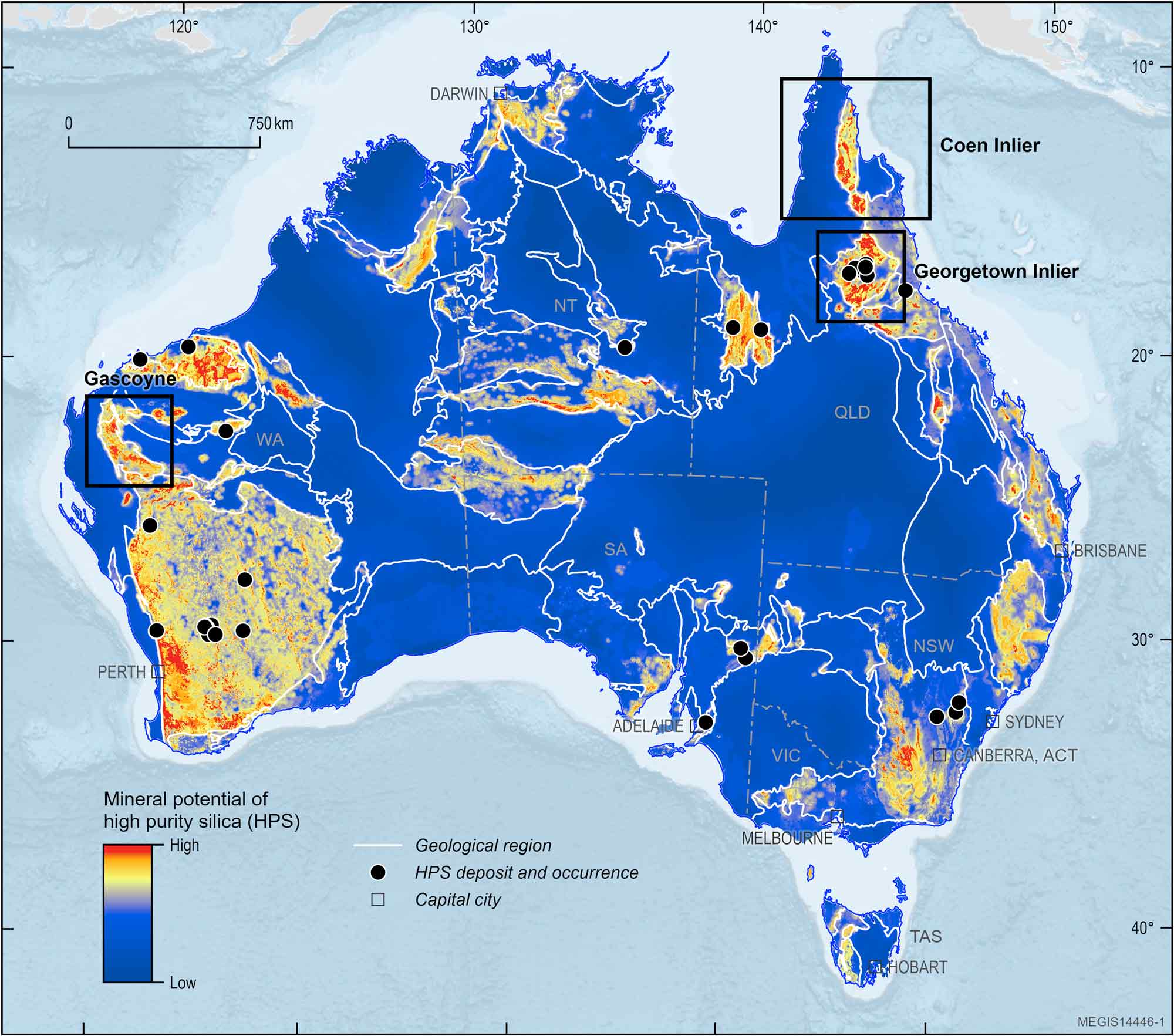
Knowledge-driven weighted sum mineral potential model for HPS in Australia, shown with geological regions outlined to show where the areas modelled as high potential sit in relation to geological regions
Found
Quartz is a primary form of silica, but not all silica is created equal. It might be everywhere, but silica that meets the criteria for high-purity silica is rare, and even trace impurities can make it unsuitable for high-tech applications. Fortunately, we can do the detailed geological detective work that lets us figure out where the right conditions occurred for high-purity silica to form.
To find high-purity silica we have identified and mapped mineral systems and regions that have the greatest potential. This encourages exploration and supports the development of a downstream silicon industry in Australia.
Interestingly, Australia hosts a diverse range of silica deposit types such as chert, hydrothermal vein-hosted, pegmatites, quartzite and alluvial gravels. While most of the world's high-purity silica comes from pegmatite or vein-hosted deposits, Australia’s geological diversity provides even more potential silica resources, which gives us the opportunity to strengthen and diversify global supply chains.
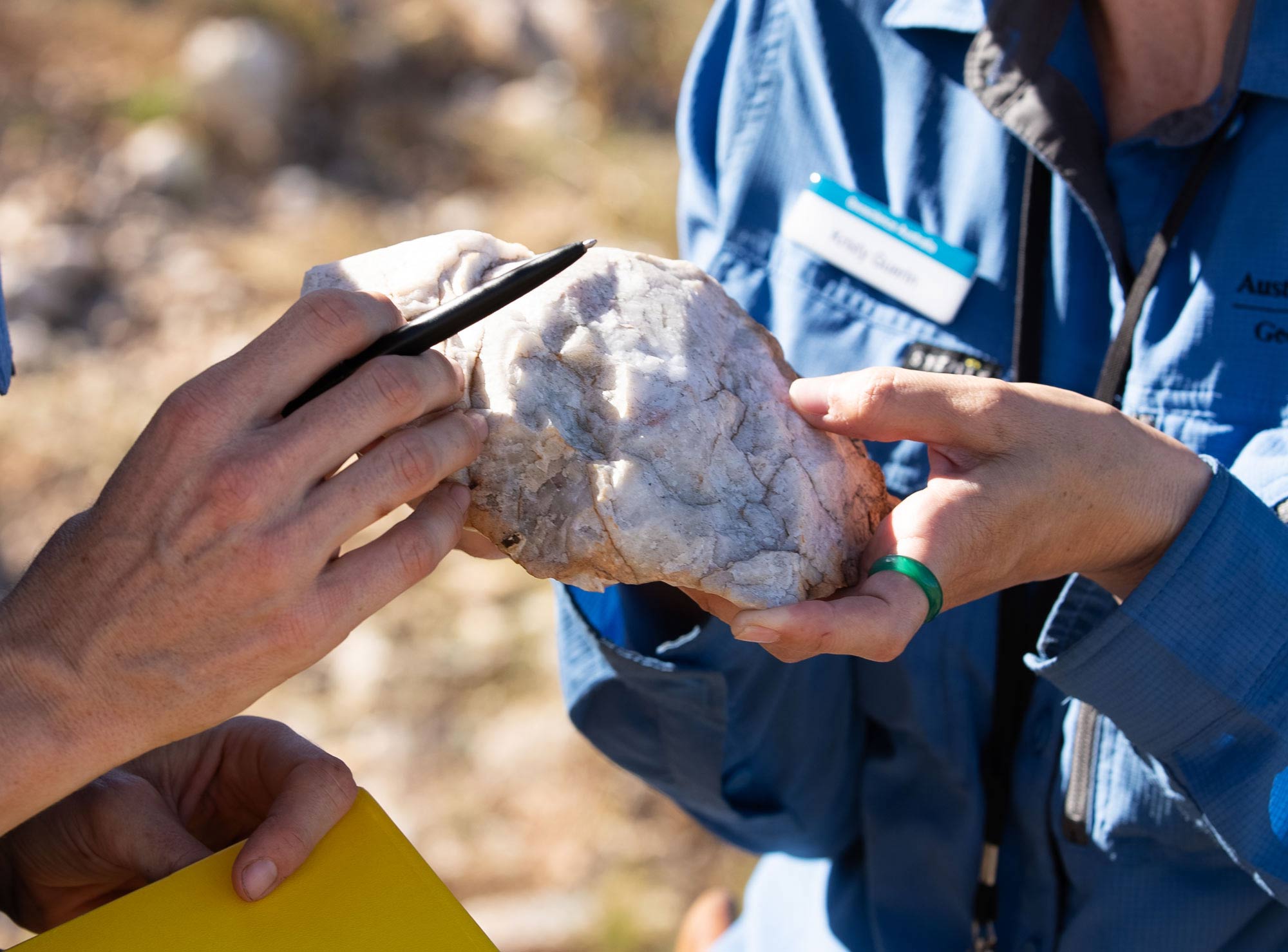
Geoscientists inspecting quartz in the Mount Isa Cloncurry Region
Extracted
Once a promising deposit is identified, mining can begin. But pulling silica-rich rock out of the ground is only the first step, and this is where the real challenge starts.
While silica itself is abundant, finding resources pure enough for high-value uses is genuinely difficult. We need to use a combination of analytical methods to determine if the silica is viable or not, which is exactly why so much scientific effort goes into identifying the right deposits before mining even begins.
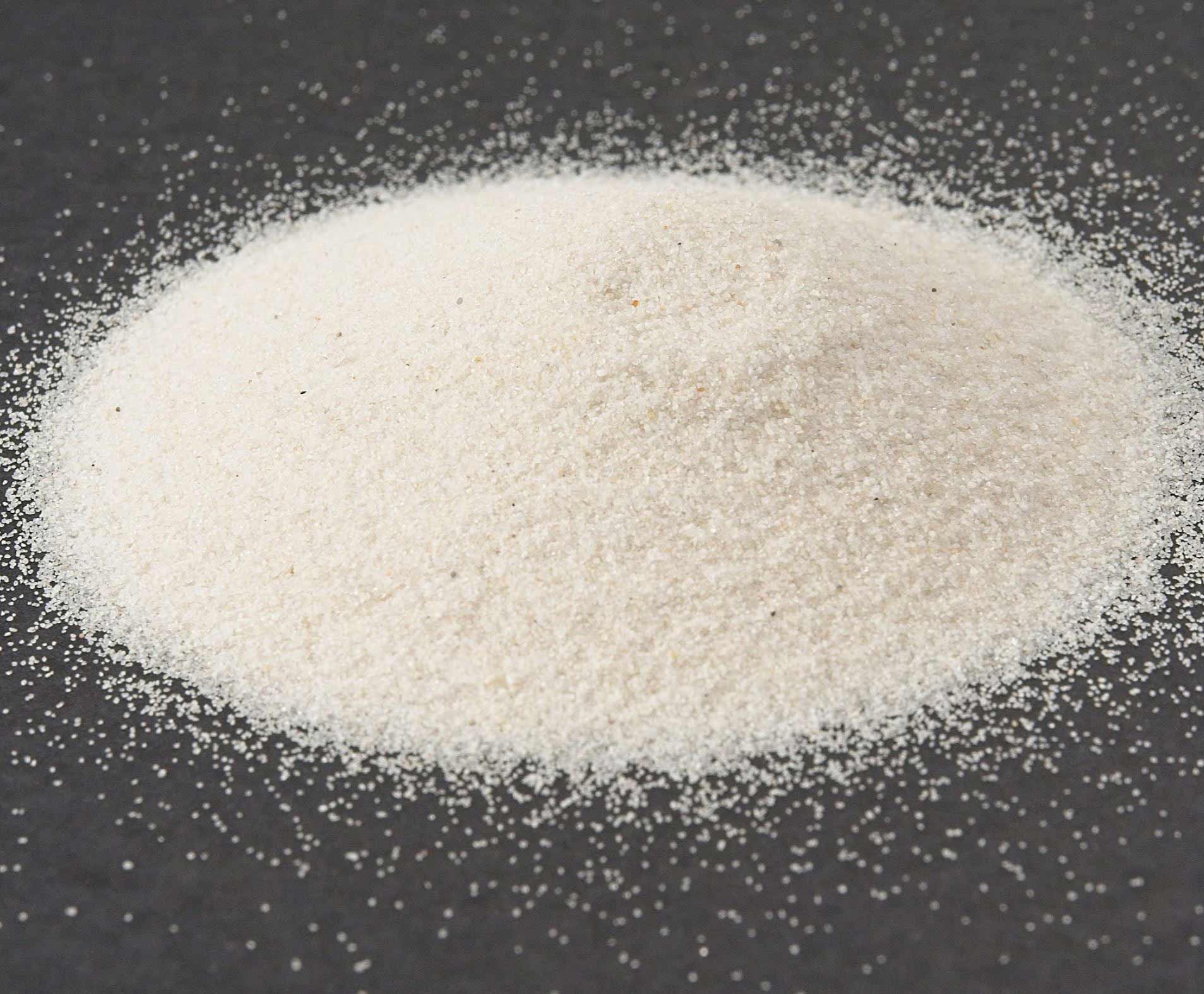
Silica sand, Geoscience Australia CC 4.0.
Purified
From quartz to silicon: this is perhaps the hardest part of silica’s day, where only the highest-level of purity will do for high-tech applications. There's a big difference between ‘metallurgical grade’ silica (98-99% SiO₂) and high-purity quartz (above 99.995% SiO₂).
Reaching the necessary level of purity requires additional refining processes, including high temperature chlorination where the mineral is exposed to chlorine gas at temperatures above 1000°C. It's an intense, specialised process, so specialised that only a handful of international facilities are currently able to complete this step.
In Australia, researchers are working to change that, developing local expertise in this kind of high-temperature processing to support a future domestic industry. The Australian Nuclear Science and Technology Organisation (ANSTO) this year opened a high temperature chlorination facility which will help industry assess whether projects can produce high-purity silica. The facility supports the Australian Government’s Future Made in Australia agenda by helping to build capability for more processing and value-adding onshore.
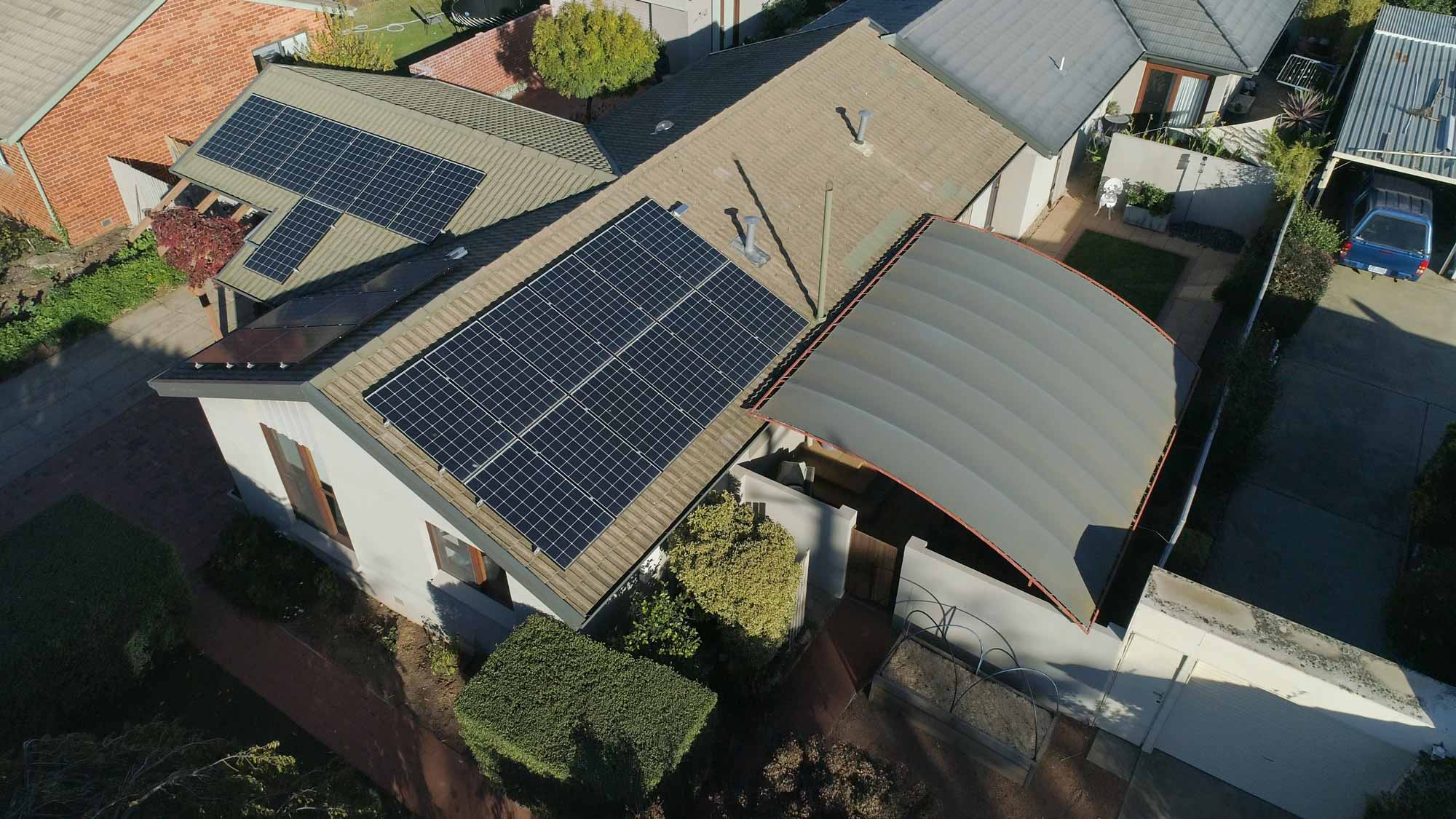
Image credit: Geoscience Australia
Powering modern technology
After its demanding journey, high-purity silica is ready to help power modern life. It is essential to technologies such as semiconductors and renewable energy. From the computer chip inside your phone and laptop through to solar panels, specialty glass, optical products and more, high-purity silica supports many of the systems we use every day.
Silicon is central to modern technologies which is why it is classified as a critical mineral. That‘s not just here in Australia, but in India, the European Union, United Kingdom, Japan and South Korea. Global demand for high-purity silica is projected to increase almost 40-fold by 2050!
So, why does this matter?
From quartz to a chip powering your phone, this is a journey that can take years: from the first regional geological surveys, to exploration, mining and processing, through to manufacturing. Researchers are working to position Australia as a future global supplier of high-purity silica, assessing our geology against the world's best-known deposits to figure out where the next discoveries might be made.
This is also why trusted geoscience matters. Our research helps build a clearer picture of where resources may occur, how they compare with known systems overseas, and what information governments, industry and communities need to consider future opportunities responsibly.
Next time you unlock your phone, take a photo, or walk past a solar panel, spare a thought for the quartz that made it possible—and the geoscientists spending their days tracking it down.
Download the Silicon factsheet to learn more about high-purity silica.