The Great ShakeOut
Page last updated:14 August 2026
Practice Earthquake Safety
Earthquakes can and do happen in Australia. With more than 100 earthquakes above magnitude 3.0 every year, it’s important to know how to keep yourself safe if you feel the ground start to shake.
Felt reports submitted to Geoscience Australia after the magnitude 5.9 Woods Point earthquake in September 2021 showed most people who felt the earthquake did not know, or did not take, recommended actions to protect themselves during the earthquake.
The Great ShakeOut is an international earthquake safety drill held on 15 October to practice earthquake safety. Watch the ‘The Great ShakeOut’ Public Talk recording to learn about science of earthquakes, the importance of knowing what to do if you experience one and find out how the information submitted through felt reports helps emergency management response and research to help disaster preparedness.
What should you do during an earthquake?
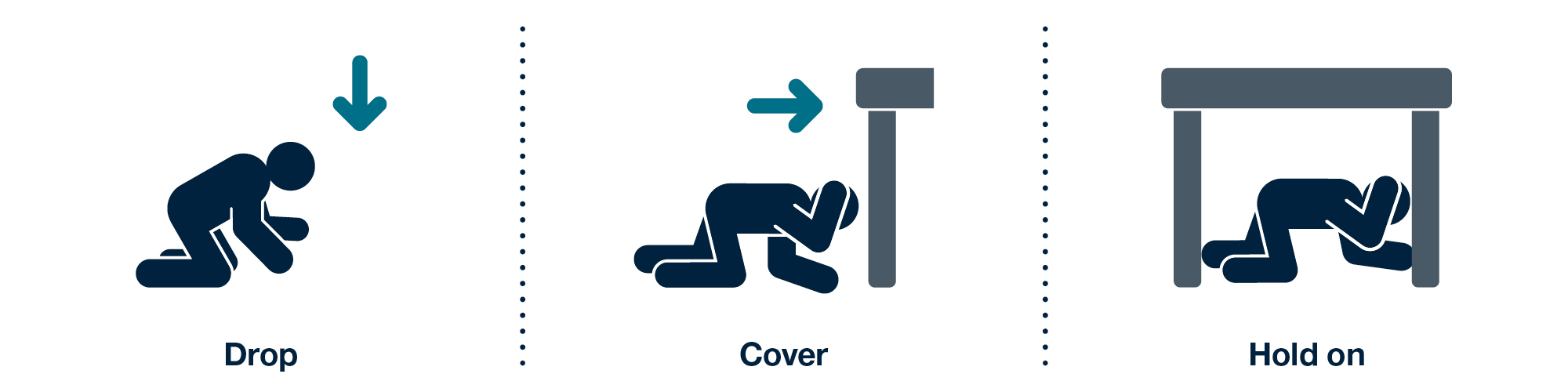
It is impossible to predict when an earthquake will happen. If you feel the ground start to shake the advice is to drop, cover and hold on until it is safe.
Drop – Get on the floor fast.
Cover – Your head with an arm and move under a table or sturdy piece of furniture to protect yourself from falling objects. If there is no cover available, move next to an interior wall and protect your head and neck with your arms.
Hold on – Stay in place until the shaking stops and you are sure it is safe to exit.
Adapt for your situation
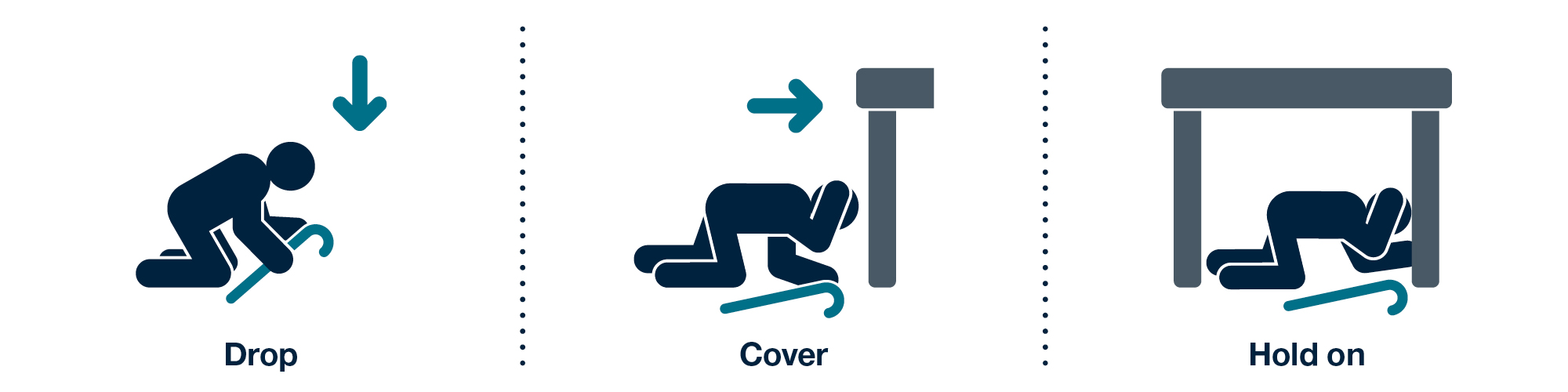
If you are unable to get to the ground safely or are unable to get up again without assistance, adapt for your circumstances.
If you use a walking stick or cane:
Drop, cover and hold on if able and safe, or sit on a bed, sturdy chair or similar and cover your head and neck with both hands. Keep your mobility aid close so you can use it when the shaking stops.
If you use a walker or wheelchair:
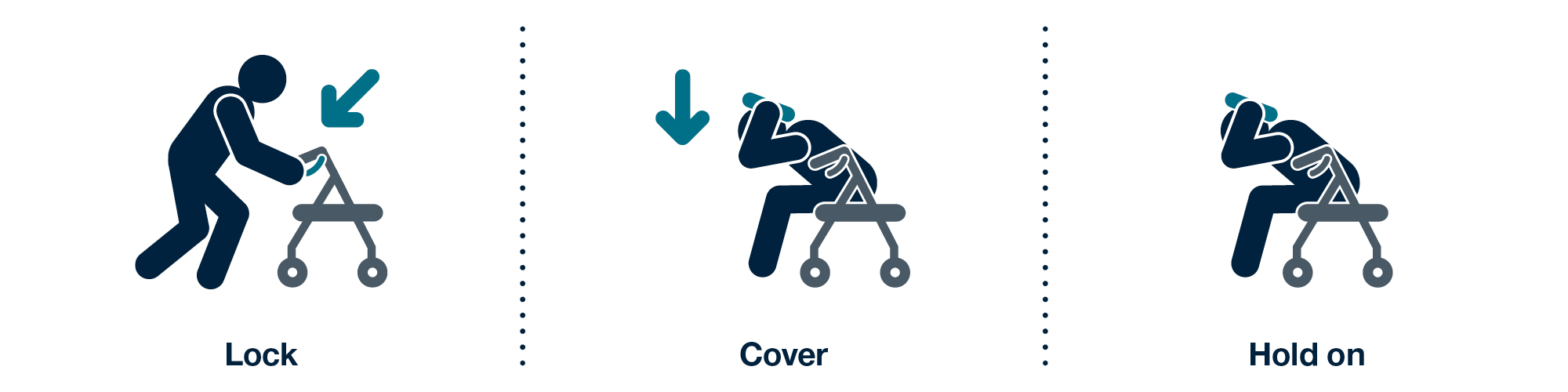
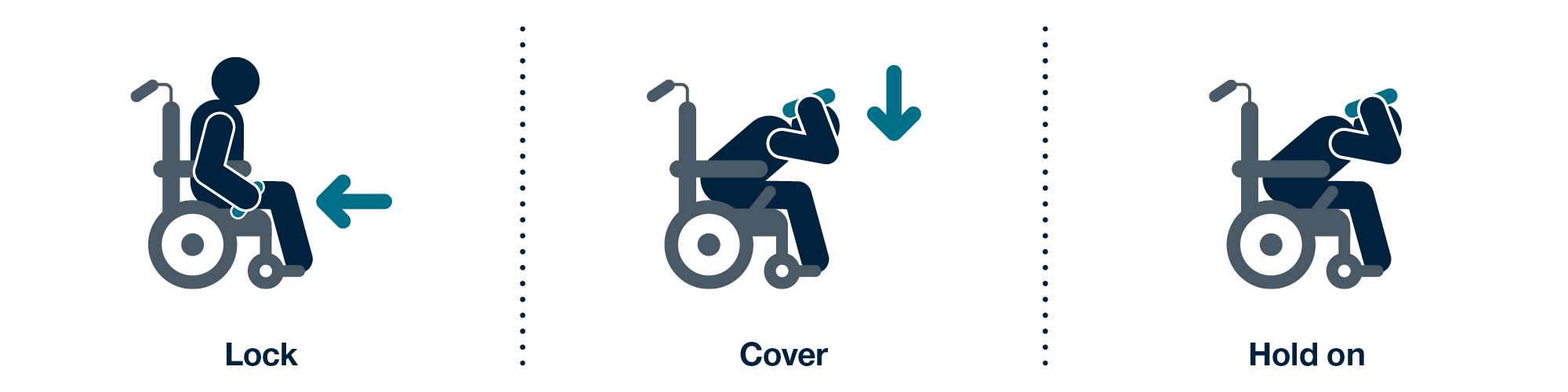
Lock — Your mobility aid’s wheels if applicable. If you are using a walker carefully get as low as possible.
Cover – Bend over and cover your head and neck with your arms, a book or a pillow to protect yourself from possible falling objects.
Hold on – Stay in place until the shaking stops and you are sure it is safe to exit.
Why does Geoscience Australia collect felt reports from the public?
If you experience an earthquake in Australia submit a felt report to our Earthquakes@GA website. This information is extremely valuable to help us better understand the intensity of earthquakes and informs important decision-making tools like the National Seismic Hazard Assessment. Like a “human seismometer,” felt reports also indicate where people noticed earthquake ground-shaking. This helps Geoscience Australia to provide rapid advice to emergency services and first responders to target the most impacted regions after an earthquake.
The public input also assists researchers who identify hazard areas, so mitigation strategies can be developed for at-risk communities.
How do I run a Great ShakeOut drill myself?
Organise your own earthquake safety drill using our downloadable resources to practice earthquake safety in your school, community group or sports group this Earth Science Week.
- Step-by-step guide to running a Great ShakeOut drill
- Fillable poster
- Fillable invite
- Instructional drill audio (version 1) (version 2)
- Social media tiles
Why does Geoscience Australia report on earthquakes?
Geoscience Australia operates the National Earthquake Alert Centre and partners with the Bureau of Meteorology to deliver the Joint Australian Tsunami Warning Centre.
The National Earthquake Alert Centre is the Australian Government’s official source of information for earthquakes in Australia and overseas. It is relied upon by emergency managers, the Australian Government, State and Territory Governments, the media and the public for accurate and timely earthquake data and advice. The data is collected from more than 150 seismometers in Australia and over 500 stations worldwide in near real-time, 24 hours a day, seven days a week.