What makes a mineral critical?
Page last updated:7 September 2026

What's really inside your phone?
In 2019, a group of researchers at the University of Plymouth had a curious idea: what if they put a smartphone in a blender?
What they found was surprising. Alongside the materials you'd expect, like iron, copper and aluminium, your phone also contains tiny traces of some far more exotic elements, such as tungsten, silver, gold and cobalt. And there are some that many people have never heard of, like tantalum, niobium, germanium and rare earths.
These are called critical minerals and, even though they show up in your phone in amounts smaller than a pinch of salt, they're doing some heavy lifting. A little indium is what makes your touchscreen work.
Why does this matter right now?
Critical minerals aren't just in your pocket. They're in electric vehicles (which need around four times more of these minerals than a petrol car), wind turbines, defence technology, camera lenses, lighting, and the batteries powering the shift to renewable energy. As the world leans harder into these technologies, demand for critical minerals is expected to rise dramatically over the coming decades.
Where does Australia fit in?
Australia is in an extraordinary position. We're already the world's largest producer of rutile and lithium, and a top five producer of several other critical commodities. Our known mineral resources are vast, but we will also need new discoveries to meet critical mineral demand. This is where Geoscience Australia comes in.
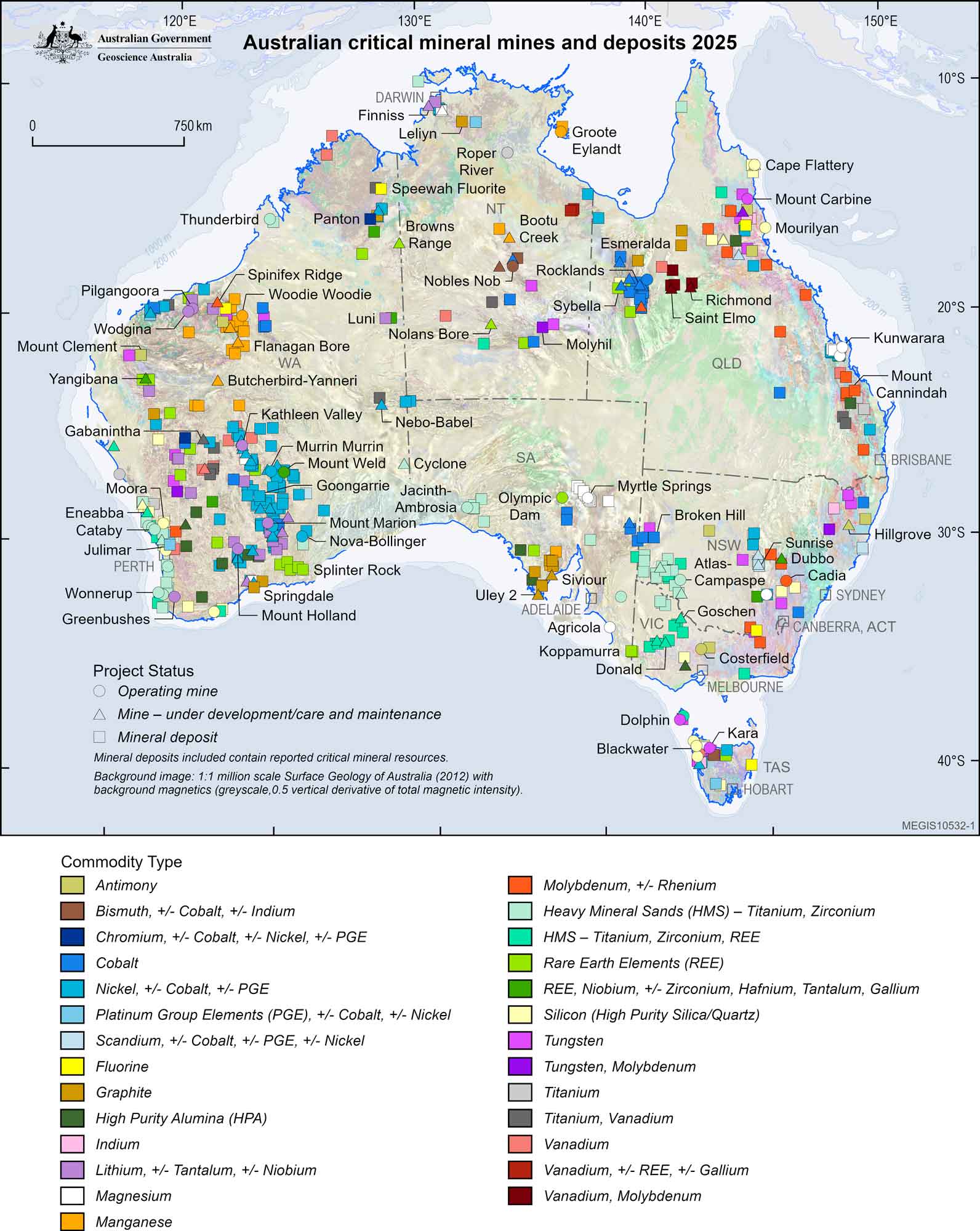
Pheeney, J., Kucka, C., Morfiadakis, A., 2026 Australian Critical Minerals Map 2025. Geoscience Australia.
We play an essential role in mapping the ground beneath us. We help identify where critical minerals may occur and turn that knowledge into trusted national data, maps, tools and advice that support evidence-based decisions by governments, industry and communities.
That matters because critical minerals are essential, but they are not always easy to get. Their supply chains are vulnerable and complex. Understanding where critical mineral resources may occur is only one part of the picture, so Geoscience Australia assesses the whole pipeline to better understand critical mineral opportunities in Australia.
Through Resourcing Australia’s Prosperity, the Australian Government’s 35-year precompetitive geoscience initiative as part of the Future Made in Australia agenda, we are assessing our national potential for resources vital to support Australia’s net zero transition and security. This includes mapping our potential for critical minerals and strategic materials, underground storage and offshore renewable energy. It will also map the groundwater systems to enable responsible management of our natural resources, contribute to our water and food security, and bolster our climate resilience.
Earth science also helps build a clearer view of the landscapes, water systems, communities and environments around those resources so decisions can be made with reliable evidence.
Want the full story?
This is just a taste of a much bigger conversation. If you're curious about the history of how ‘critical minerals’ became a global buzzword, how scientists assess which minerals are critical, or why Australia's approach is different from other countries, check out our public talk: What are Critical Minerals and Strategic Materials and why do they matter? An Australian Perspective.
Register now for our new Earth Science Week public talk on Critical Minerals.
Learn about critical mineral and strategic material resources in Australia, including what they are, why they are needed, Australia’s comparative endowment, government support, and the role of Geoscience Australia’s precompetitive geoscience within this context.
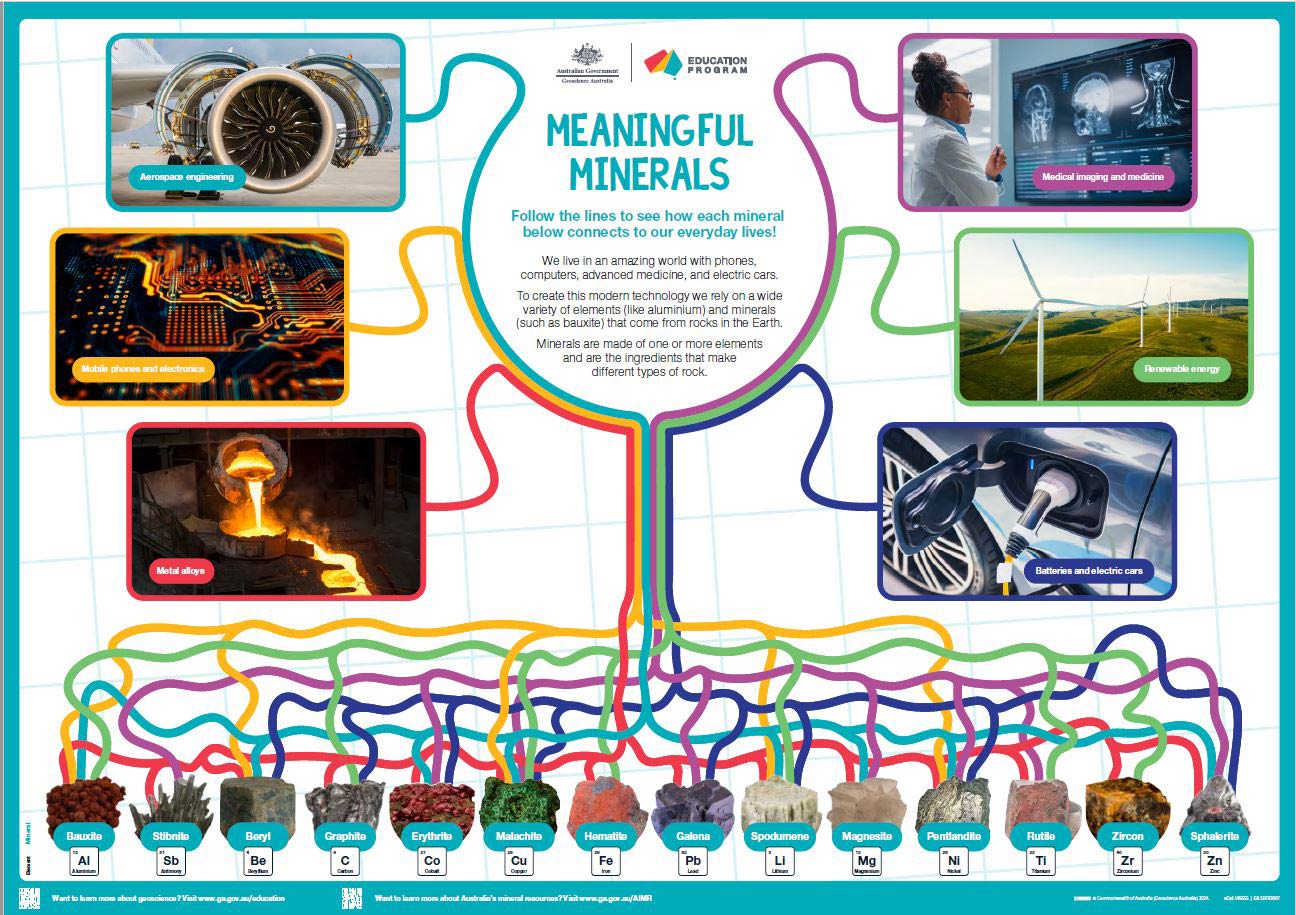
Have a look at the many ways that minerals and elements are used in our everyday lives by downloading our Meaningful Minerals poster.