Appendix 3: Resource classification
Page last updated:23 October 2025
Development of new energy sources requires reliable estimates of how much energy is available at potential development sites. Reporting systems have been developed for the different resource types. Adherence to standards and common frameworks makes it possible for investors to evaluate risk and potential returns, and for governments to set policy and regulations and make decisions on infrastructure development.
Schemes currently commonly used for classifying minerals, petroleum and geothermal energy utilise two axes, one to describe geological certainty, and another to describe investment or commercial readiness. These schemes are based on the McKelvey classification published in 1972 and 1976. Each of the resource estimation and reporting schemes utilised in Australia for oil and gas, coal, thorium and uranium are discussed briefly below. A three-axis classification scheme, incorporating an economic and social viability axis, field project and feasibility axis, and geological knowledge axis, has been developed by the United Nations Economic Commission for Europe (United Nations Economic Commission for Europe 2009) but is not currently applied in Australia.
Petroleum resource classification
The petroleum industry in Australia uses the Petroleum Resources Management System (PRMS) for classification of oil and gas resources. The description ahead is a summary of the foundation principles contained in the 2007 PRMS and the relevant updates in the revised 2018 PRMS (SPE, 2018).
Oil and gas reserves and resources denote volumes that may be commercially recovered in the future. Resources are physically located in reservoirs deep underground and cannot be visually inspected or counted, but the amount of oil and gas present can be estimated by evaluating geological data. All estimates involve some degree of uncertainty due to limitations in the existence and reliability of required data.
The PRMS incorporates a central framework that categorises reserves and resources according to the level of certainty associated with their potentially recoverable volumes (horizontal axis in Figure A.2) and classifies them according to the chance of reaching commercial producing status (vertical axis).
Chance of commerciality classes (vertical axis)
The four major recoverable resources classes defined by the PRMS are production, reserves, contingent resources, and prospective resources. There is also a distinct class for unrecoverable petroleum. These classes are shown on the vertical axis of the PRMS framework.
Production is the quantity of oil and natural gas that has been recovered already (by a specified date). This is primarily output from operations for use by consumers.
Reserves represent that part of resources which are anticipated to be commercially recoverable and have been justified for development. They are quantities of petroleum from a known accumulation that can be recovered as part of a development project under defined conditions from a given date forward.
Contingent resources are less certain than reserves. These are resources that are potentially recoverable but not yet considered mature enough for commercial development due to technological or business hurdles. For contingent resources to move into the reserves category, the key conditions, or contingencies, that prevented commercial development must be resolved. Approvals of development and environmental plans are examples of contingencies to be resolved. For contingent resources at the 'development pending' project stage, there must be evidence of firm intention by a company's management to proceed with development within a reasonable time frame (typically five years, though it could be longer).
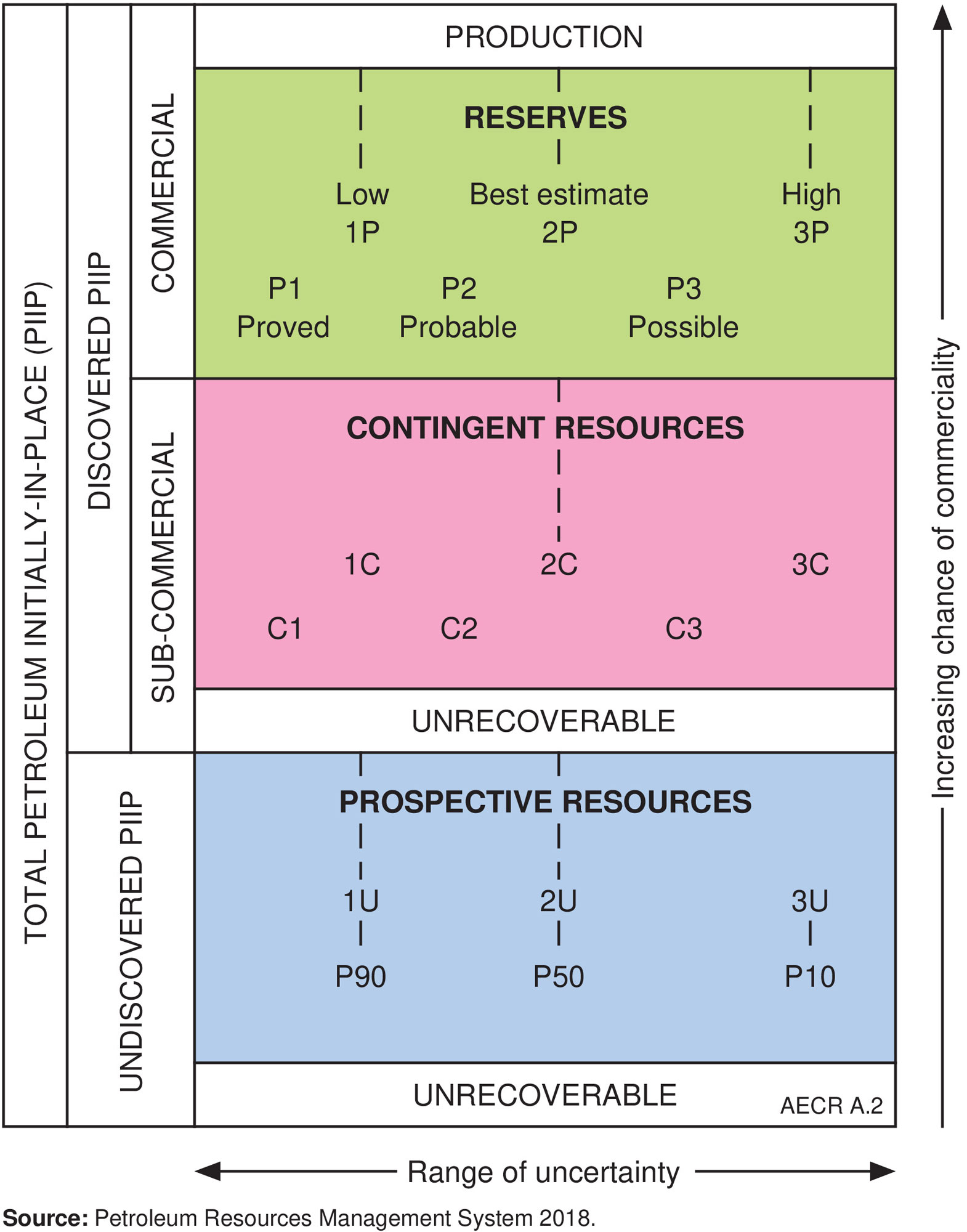
Figure A.2 Petroleum resources classification framework
Prospective resources are estimated volumes associated with undiscovered accumulations. These represent quantities of petroleum which are estimated, as of a given date, to be potentially recoverable from oil and gas deposits which have not been drilled but have been identified on the basis of indirect evidence. This class represents a higher risk than contingent resources since the risk of discovery is also added. For prospective resources to become classified as contingent resources, hydrocarbons must be discovered, the accumulations must be further evaluated and an estimate of quantities that would be recoverable under appropriate development projects prepared.
Some petroleum will be classified as "unrecoverable" at this point in time, not being producible by any projects that the company may plan or foresee. While a portion of these quantities may become recoverable in the future as commercial circumstances change or technological developments occur, some of the remaining portion may never be recovered due to physical or chemical constraints in the reservoir. The volumes classified using the system represent the analysis of the day, and should be regularly reviewed and updated, as necessary, to reflect changing conditions.
A project may have recoverable quantities in several resource classes simultaneously. As barriers to development are removed, some resources may move to a higher classification. One of the primary distinctions between resources and reserves is that while resources are technically recoverable, they may not be commercially viable. Reserves are always commercially viable and there is intent to develop them.
Range of uncertainty categories (horizontal axis)
The range of uncertainty in resource estimates is captured by categories that represent the likelihood of given quantities being recovered. These can be either cumulative low, best and high forecasts, or incremental proved, probable and possible estimates, for the resource classes shown in Figure A.2.
The category with a high degree of certainty in the reserves class, in which quantities are reasonably certain to be recoverable from known reservoirs under defined commercial and other conditions, is proved reserves (P1, and equal to 1P, in Figure A.2). Proved reserves are the low estimate of reserves. The best estimate of reserves (2P) is the sum of proved (P1) plus probable (P2) reserves, which has an added degree of uncertainty in the estimate of recoverable quantities. The optimistic, or high estimate (3P), of reserves is the sum of proved (P1) plus probable (P2) plus possible (P3) reserves. There is a low probability that the actual quantities recovered will equal or exceed the high estimate, as possible reserves are assessed from geoscience and engineering data to have a low likelihood of recovery.
The uncertainty range of contingent resources is categorised on a similar cumulative (1C, 2C, 3C) or incremental (C1, C2, C3) basis. Undiscovered prospective resources are categorised on a cumulative basis only, in which the unrisked low, best and high estimates are given as 1U, 2U and 3U to denote uncertainty in potentially recoverable quantities.
The best estimate of recovery from committed projects is generally considered to be the 2P sum of proved and probable reserves. The total value of any resource base must include an assessment of the contingent and prospective resources as well as reserves.
Mineral resource classification
Minerals companies listed on the Australian Securities Exchange report resource information according to the Australasian Code for Reporting of Exploration Results, Mineral Resources and Ore Reserves, also called the 'JORC Code' (Joint Ore Reserves Committee [JORC] 2012). The Joint Ore Reserves Committee was established in 1971 and published several reports containing recommendations on the classification and Public Reporting of Ore Reserves prior to the release of the first edition of the JORC Code in 1989. The JORC Code utilises axes of geological uncertainty and commercial readiness (Figure A.3). The summary below paraphrases the JORC Code (2012).
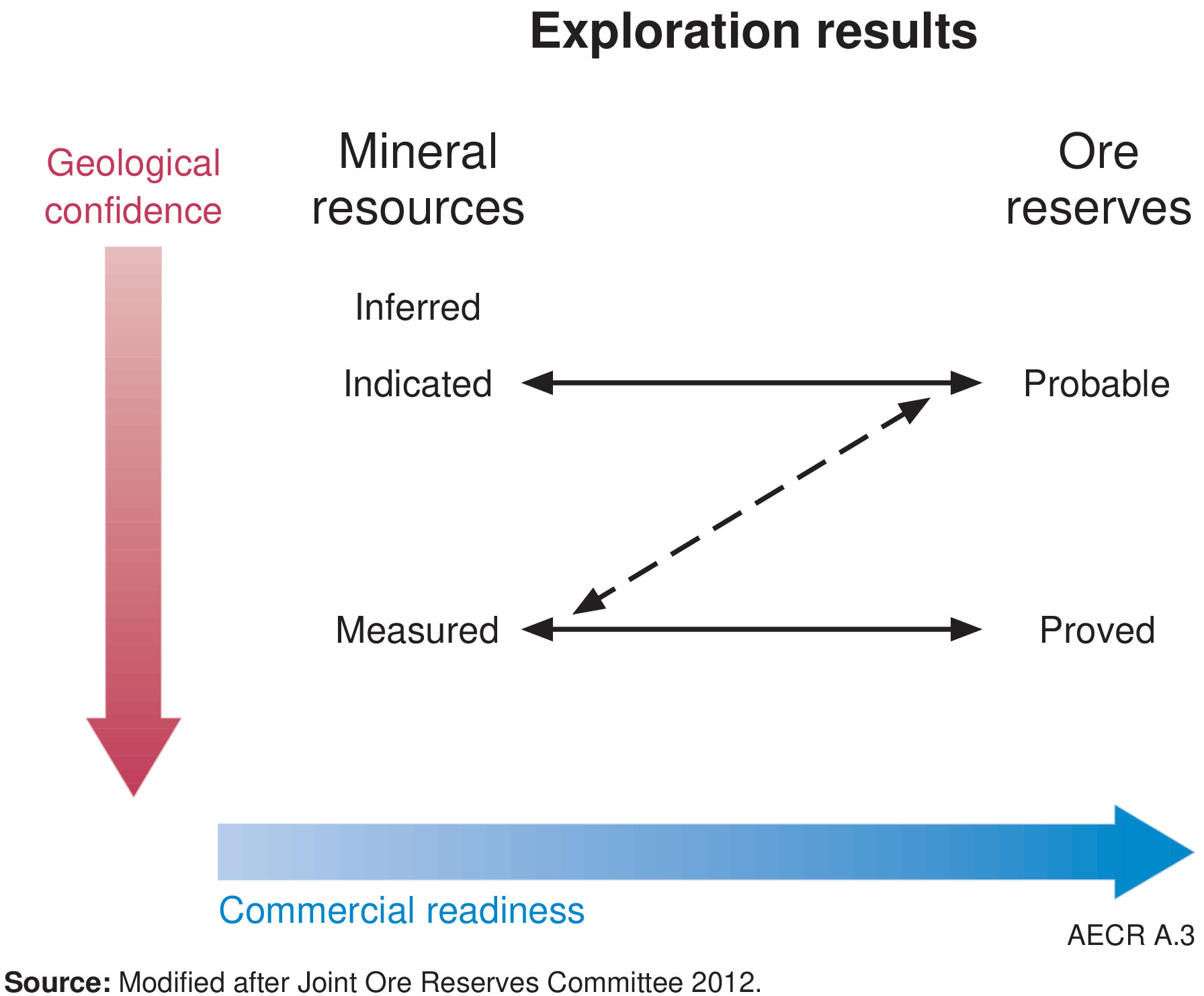
Figure A.3 General relationships between exploration results, mineral resources and ore reserves
A 'Mineral Resource' is a concentration or occurrence of solid material of economic interest in or on the Earth's crust in such form, grade (or quality), and quantity that there are reasonable prospects for eventual economic extraction (i.e. more likely than not), regardless of the classification of the resource. The location, quantity, grade (or quality), continuity and other geological characteristics of a Mineral Resource are known, estimated or interpreted from specific geological evidence and knowledge, including sampling. Mineral Resources are sub-divided, in order of increasing geological confidence, into Inferred, Indicated and Measured categories.
An 'Inferred Mineral Resource' is that part of a Mineral Resource for which quantity and grade (or quality) are estimated on the basis of limited geological evidence and sampling. Geological evidence is sufficient to imply but not verify geological and grade (or quality) continuity. An Inferred Mineral Resource has a lower level of confidence than that applying to an Indicated Mineral Resource and must not be converted to an Ore Reserve. It is reasonably expected that the majority of Inferred Mineral Resources could be upgraded to Indicated Mineral Resources with continued exploration.
An 'Indicated Mineral Resource' is that part of a Mineral Resource for which quantity, grade (or quality), densities, shape and physical characteristics are estimated with sufficient confidence to allow the application of Modifying Factors in sufficient detail to support mine planning and evaluation of the economic viability of the deposit. An Indicated Mineral Resource has a lower level of confidence than that applying to a Measured Mineral Resource and may only be converted to a Probable Ore Reserve.
A 'Measured Mineral Resource' is that part of a Mineral Resource for which quantity, grade (or quality), densities, shape, and physical characteristics are estimated with confidence sufficient to allow the application of Modifying Factors to support detailed mine planning and final evaluation of the economic viability of the deposit. A Measured Mineral Resource has a higher level of confidence than that applying to either an Indicated Mineral Resource or an Inferred Mineral Resource. It may be converted to a Proved Ore Reserve or under certain circumstances to a Probable Ore Reserve.
'Modifying Factors' are considerations used to convert Mineral Resources to Ore Reserves. These include, but are not restricted to, mining, processing, metallurgical, infrastructure, economic, marketing, legal, environmental, social and governmental factors. Consideration of the confidence level of the Modifying Factors is important in conversion of Mineral Resources to Ore Reserves.
An 'Ore Reserve' is the economically mineable part of a Measured and/or Indicated Mineral Resource. It includes diluting materials and allowances for losses, which may occur when the material is mined or extracted and is defined by studies at Pre-Feasibility or Feasibility level as appropriate that include application of Modifying Factors. Such studies demonstrate that, at the time of reporting, extraction could reasonably be justified.
A 'Probable Ore Reserve' is the economically mineable part of an Indicated, and in some circumstances, a Measured Mineral Resource. The confidence in the Modifying Factors applying to a Probable Ore Reserve is lower than that applying to a Proved Ore Reserve. A Probable Ore Reserve has a lower level of confidence than a Proved Ore Reserve but is of sufficient quality to serve as the basis for a decision on the development of the deposit.
A 'Proved Ore Reserve' is the economically mineable part of a Measured Mineral Resource. A Proved Ore Reserve implies a high degree of confidence in the Modifying Factors.
National Classification System for Identified Mineral Resources
The following terminology and definitions are used in Australia's National Classification System for Identified Mineral Resources.
Resource: A concentration of naturally occurring solid, liquid, or gaseous materials in or on the Earth’s crust and in such form that its economic extraction is presently or potentially (within a 20–25 year timeframe) feasible.
Identified Resource: A specific body of mineral-bearing material whose location, quantity and quality are known from specific measurements or estimates from geological evidence for which economic extraction is presently or potentially (within a 20–25 year timeframe) feasible.
To reflect degrees of geological assurance, Identified Resources can be divided into Measured Resources, Indicated Resources and Inferred Resources where Measured Resources have the most geological confidence and Inferred Resources the least. The National Classification System’s definitions for Measured, Indicated and Inferred Resources are consistent with those of the JORC Code.
Under the JORC Code, with the application of Modifying Factors and mine planning, Measured Resources can be converted into Proved Ore Reserves or Probable Ore Reserves and Indicated Resources can be converted into Probable Ore Reserves.
Demonstrated Resource: A collective term for the sum of Measured and Indicated Resources, including Proved and Probable Ore Reserves.
Economic: This term implies that, at the time of determination, profitable extraction or production under defined investment assumptions has been established, analytically demonstrated, or assumed with reasonable certainty.
Economic Demonstrated Resource (EDR): A Demonstrated Resource that is regarded as economic under the definition above. The EDR category provides a long-term view of what is likely to be available for mining (potential supply). It is inclusive of Ore Reserves, which can be considered separately for shorter-term, commercial viewpoints of the economic category. It does not include Inferred Resources as these do not have enough geological confidence to support mine planning.
Subeconomic: This term refers to those resources that are geologically demonstrated but which do not meet the criteria of Economic at the time of determination. Subeconomic Resources include paramarginal and submarginal categories:
Paramarginal: That part of Subeconomic Resources which, at the time of determination, could be produced given postulated limited increases in commodity prices or cost-reducing advances in technology. The main characteristics of this category are economic uncertainty and/or failure (albeit just) to meet the criteria of economic.
Submarginal: That part of Subeconomic Resources that would require a substantially higher commodity price or major cost-reducing advance in technology to render them economic.
Accessible Economic Demonstrated Resource (AEDR): Some resources have enough geological confidence to be considered a Demonstrated Resource and, in normal circumstances, would also be regarded as economic but they are not currently available for development because of legal and/or land-use restrictions. They are included in EDR but not in AEDR.
Uranium resource classification
Geoscience Australia prepares estimates of Australia's uranium resources within categories defined by the Organisation for Economic Co-operation and Development Nuclear Energy Agency and International Atomic Energy Agency (OECD NEA and IAEA 2018). The following is summarised from that publication.
Uranium resources are classified by a scheme (based on geological certainty and costs of production) developed to combine resource estimates from a number of different countries into harmonised global figures. Identified resources (which include Reasonably Assured Resources (RAR), and Inferred Resources) refer to uranium deposits delineated by sufficient direct measurement to conduct pre-feasibility and sometimes feasibility studies. For RAR, high confidence in estimates of grade and tonnage are generally compatible with mining decision-making standards. Inferred resources are not defined with such a high degree of confidence and generally require further direct measurement prior to making a decision to mine. Undiscovered resources (prognosticated and speculative) refer to resources that are expected to exist based on geological knowledge of previously discovered deposits and regional geological mapping.
Resource estimates are divided into separate categories reflecting different levels of confidence in the quantities reported. The resources are further separated into categories based on the cost of production.
Reasonably Assured Resources refers to uranium that occurs in known mineral deposits of delineated size, grade and configuration such that the quantities which could be recovered within the given production cost ranges with currently proven mining and processing technology, can be specified. Estimates of tonnage and grade are based on specific sample data and measurements of the deposits and on knowledge of deposit characteristics. Reasonably assured resources have a high assurance of existence. Unless otherwise noted, RAR are expressed in terms of quantities of uranium recoverable from mineable ore (see recoverable resources).
Inferred resources refers to uranium, in addition to RAR, that is inferred to occur based on direct geological evidence, in extensions of well-explored deposits, or in deposits in which geological continuity has been established but where specific data, including measurements of the deposits, and knowledge of the deposit's characteristics, are considered to be inadequate to classify the resource as RAR. Estimates of tonnage, grade and cost of further delineation and recovery are based on such sampling as is available and on knowledge of the deposit characteristics as determined in the best known parts of the deposit or in similar deposits. Less reliance can be placed on the estimates in this category than on those for RAR. Unless otherwise noted, inferred resources are expressed in terms of quantities of uranium recoverable from mineable ore.
Cost categories
The OECD NEA and IAEA (2018) uses cost categories, in United States dollars (USD), defined as: <USD 40/kgU, <USD 80/kgU, <USD 130/kgU and <USD 260/kgU. All resource categories are defined in terms of costs of uranium recovered at the ore processing plant.
Reasonably Assured Resource and Inferred Resource estimates are expressed in terms of recoverable tonnes of uranium (i.e. quantities of uranium recoverable from mineable ore), as opposed to quantities contained in mineable ore, or quantities in situ (i.e. not taking into account mining and milling losses).
References
Geoscience Australia, 2024. Australia's Identified Mineral Resources 2023, Appendices (last accessed 20 March 2024).
Joint Ore Reserves Committee. 2012. Australasian Code for Reporting of Exploration Results, Mineral Resources and Ore Reserves. The JORC Code. (last accessed 20 March 2024).
OECD NEA and IEA (Organisation for Economic Co-operation and Development Nuclear Energy Agency and International Atomic Energy Agency), 2018. Uranium 2018. Resources, Production and Demand. (last accessed 20 March 2024).
SPE (Society of Petroleum Engineers), 2018. Petroleum Resources Management System Version 1.01 (revised June 2018). (last accessed 20 March 2024).
United Nations Economic Commission for Europe, 2009. United Nations Framework Classification for Fossil Energy and Mineral Reserves and Resources 2009 incorporating Specifications for its Applications. (last accessed 20 March 2024).