Knowledge article Australia's significant rock features
Page last updated:4 November 2026
Australia has some of the oldest geological features in the world, as well as evidence of relatively recent volcanic activity. Its distinctive formations reveal processes that have shaped the continent over millions of years.
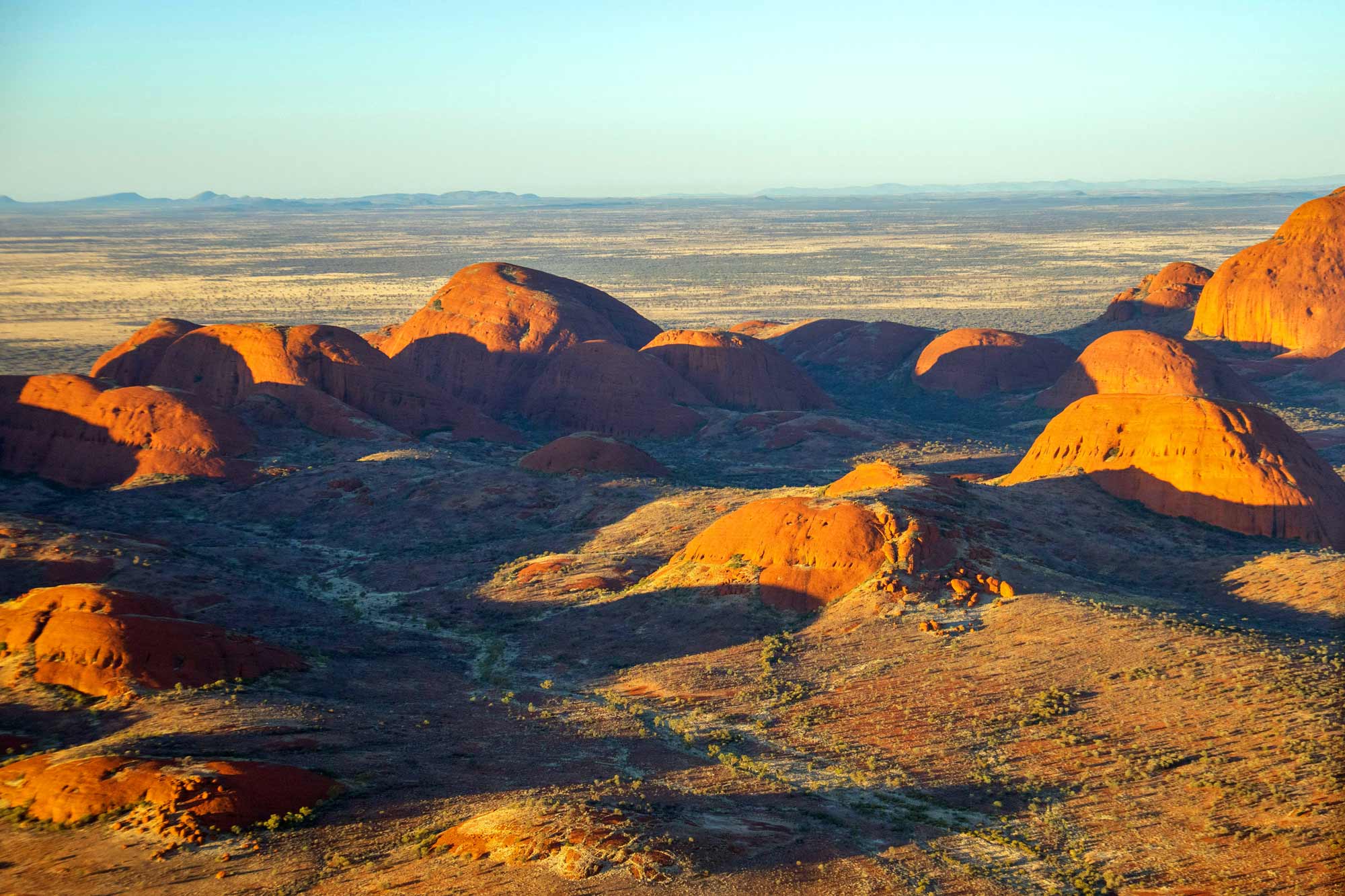
Uluṟu-Kata Tjuṯa National Park, Northern Territory
How old are Australia's rocks?
Australia has some of the oldest geological features in the world. The oldest known rocks date from more than 3,000 million years ago, while rare zircon crystals dating back 4,400 million years provide evidence of Australia's very ancient geological history.
These ancient features compare with some of the oldest known rocks on Earth, including rocks in north-western Canada that formed about 4,031 million years ago.
Australia also has much younger geological features. Some areas of Victoria and Queensland have been affected by volcanic activity that continued until a few thousand years ago. Australia's youngest mainland volcano is Mount Gambier in South Australia, which last erupted about 6,000 years ago.
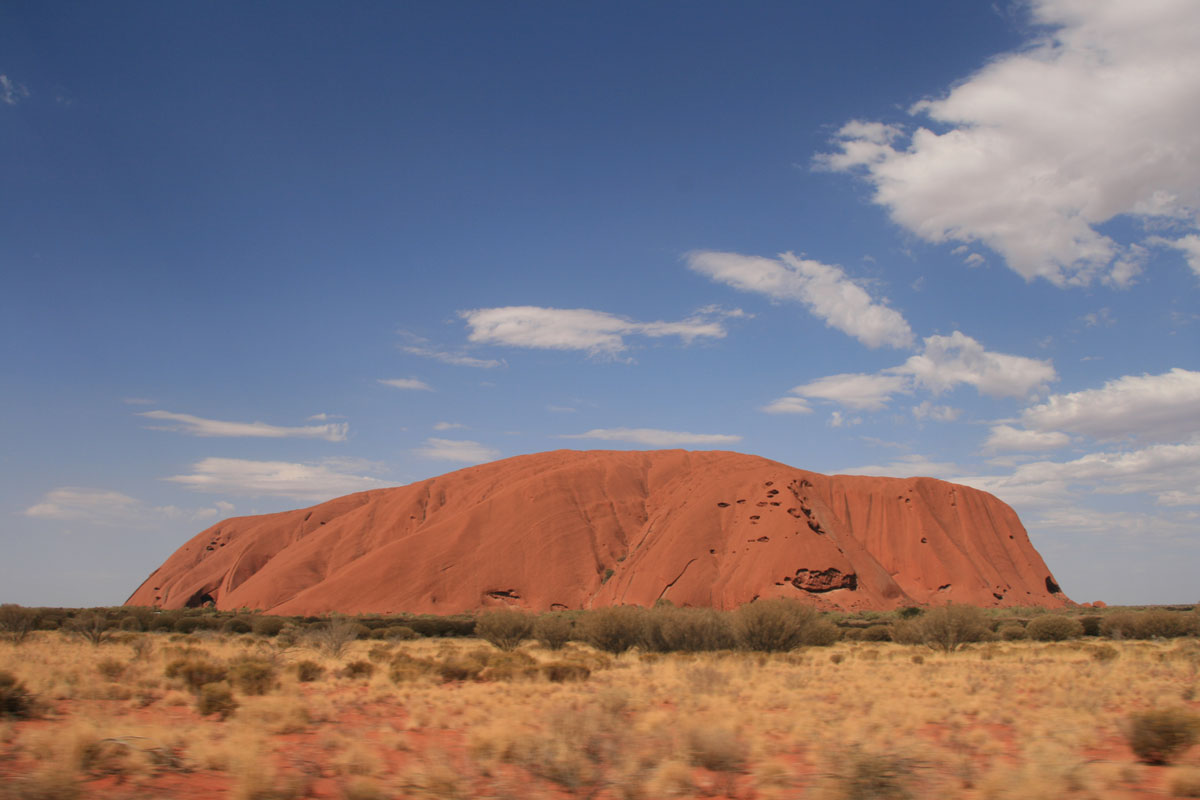
Uluru in Central Australia's outback Northern Territory
Uluru, Northern Territory
Uluru is a massive sandstone rock formation in central Australia. Formerly known as ‘Ayers Rock’, it covers an area of 3.3 square kilometres, measures 9.4 kilometres around its base and rises 345 metres above the surrounding plain.
Uluru is the surface expression of a much larger volume of rock. It is an eroded remnant that was laid down in an inland sea during the Cambrian Period about 500 million years ago.
Earth uplift and folding about 300–400 million years ago tilted the rock to create its present vertical orientation from the original horizontal sedimentary strata.
Erosion of the surrounding area has left Uluru and nearby Kata Tjuta exposed. Both are within Uluru-Kata Tjuta National Park.
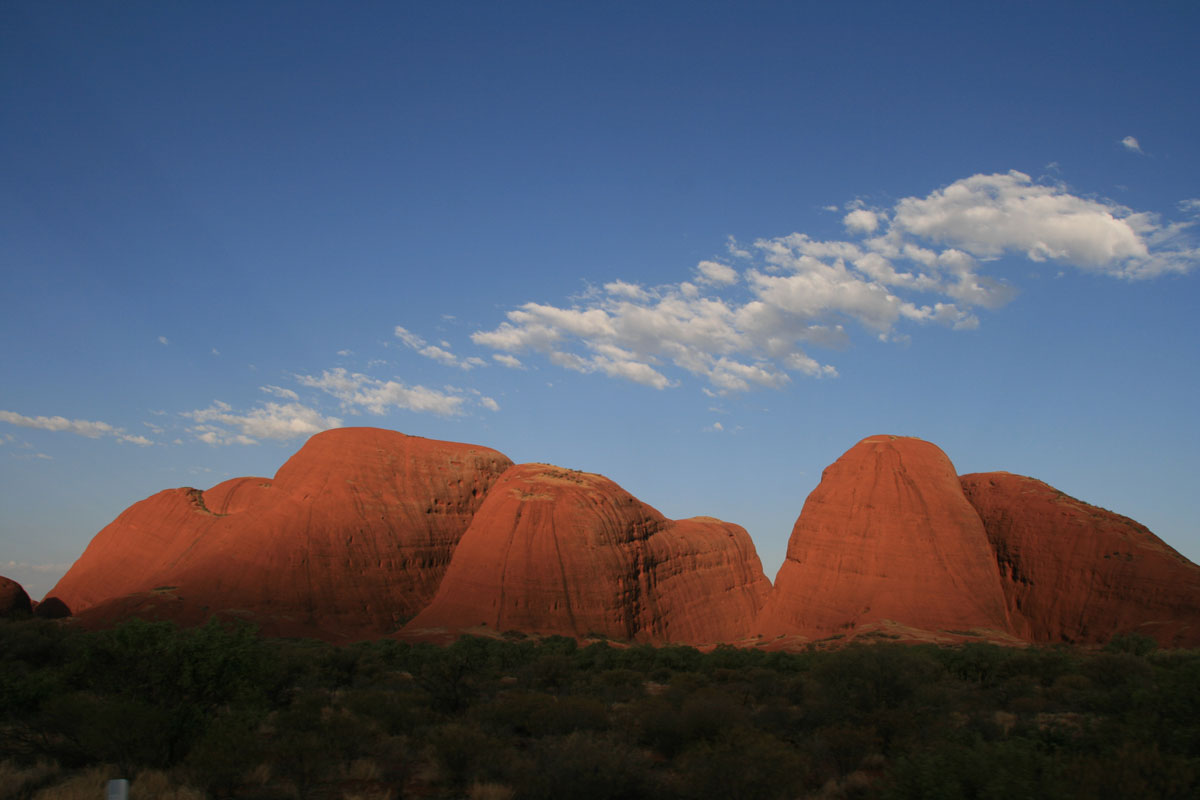
Kata Tjuta-Olgas
Kata Tjuta, Northern Territory
Kata Tjuta is a group of 28 rounded rock domes in the Northern Territory. Formerly known as ‘the Olgas’, the group includes Mount Olga, which rises 545.4 metres above the surrounding plain and is almost 200 metres higher than nearby Uluru.
The domes are made of sedimentary rock conglomerate with iron oxide impurities. The conglomerate resulted from the erosion of mountains pushed up during Earth movements and consists of sandstone, granite and ironstone bound together by muddy and sandy sediments.
Both features are within the Uluru-Kata Tjuta National Park.
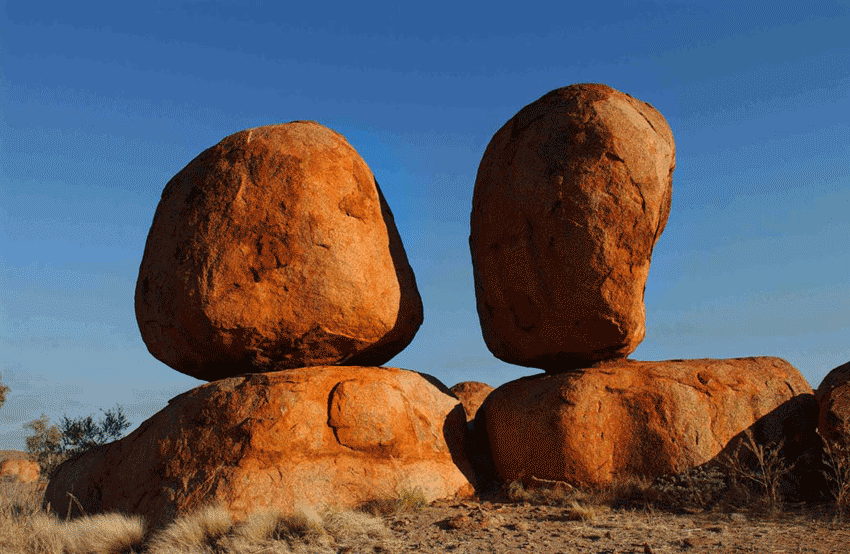
Karlwe Karlwe
Karlwe Karlwe, Northern Territory
Karlwe Karlwe, also known as the Devil's Marbles, is a collection of large, rounded granite boulders near Wauchope in the Northern Territory.
The granite formed from molten rock that solidified beneath a layer of sandstone and developed vertical and horizontal cracks. Over time, the sandstone eroded, exposing the granite, which then weathered into soft sand and clay surrounding hard blocks of granite called corestones.
Gradual removal of the soft sand and clay exposed the rounded boulders, allowing them to appear balanced on top of one another.
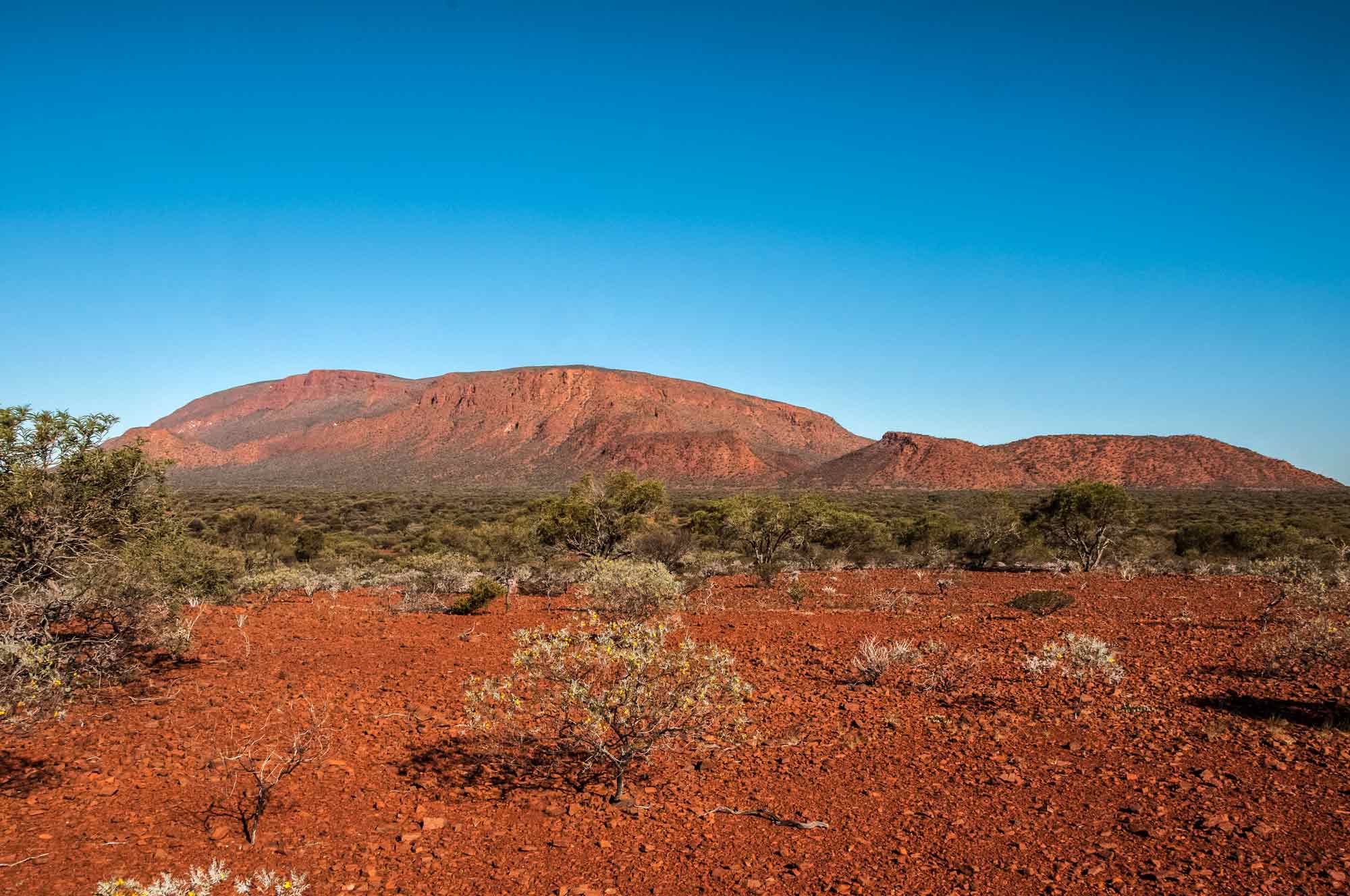
Mount Augustus, Western Australia. Credit: Graeme Churchard, Wikimedia Commons.
Mount Augustus, Western Australia
Mount Augustus is a large sandstone and conglomerate geological structure in Western Australia. The visible portion is twice the size of Uluru. It sits on a bedrock granite base, is about 8 kilometres long and stands 858 metres above the surrounding plain and 1,105 metres above sea level.
The rock of Mount Augustus is estimated to be about 1,000 million years old. The rock was formed from an uplifted remnant of ancient seabed of sedimentary Proterozoic sandstone and conglomerate.
The granite rock beneath Mount Augustus is said to be 1,650 million years old. The Indigenous name for Mount Augustus is Burringurrah.
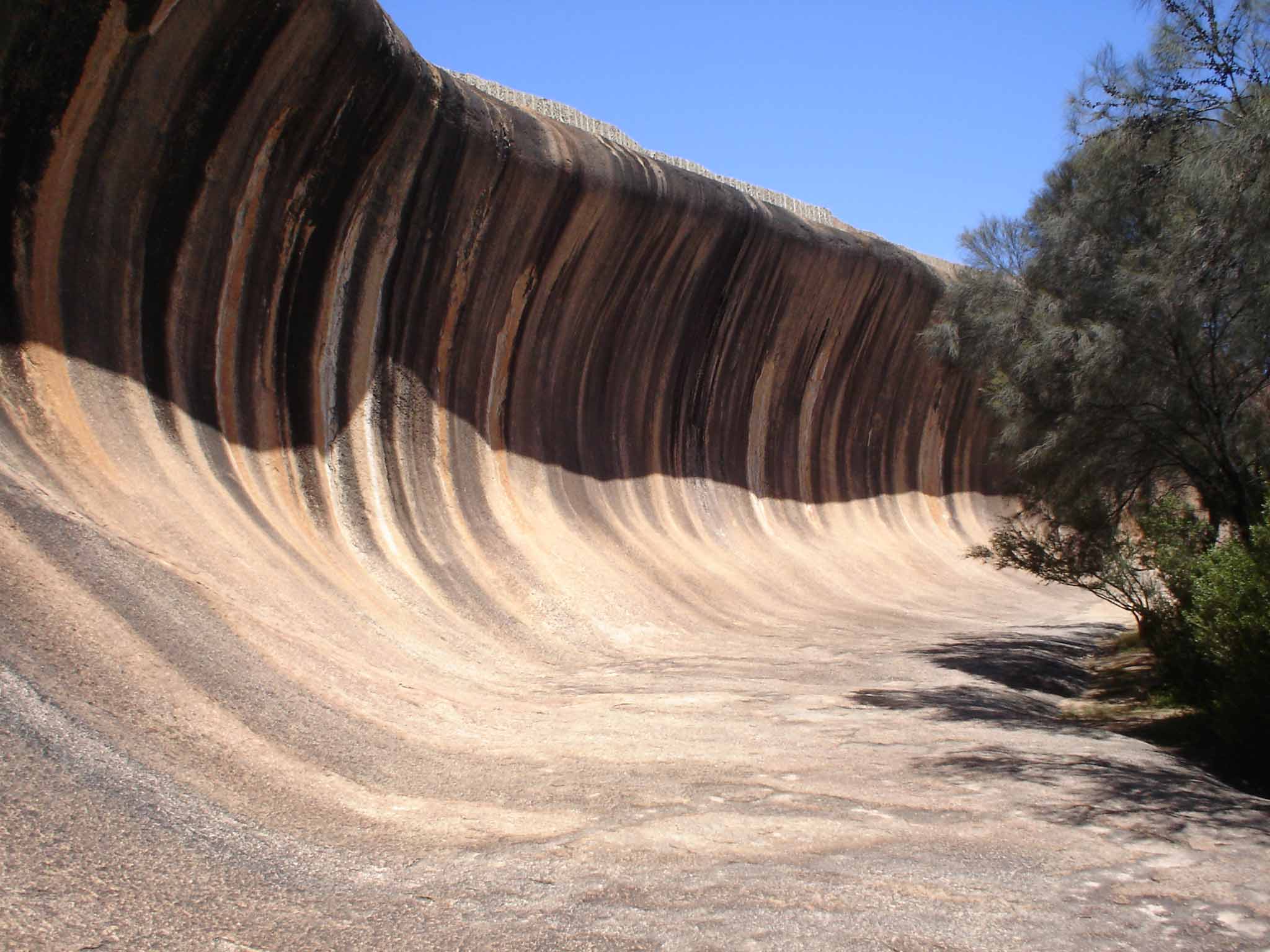
Wave Rock, near Hyden, Western Australia. Credit: Fredrik Bülow, Wikimedia Commons.
Wave Rock, Western Australia
Wave Rock is a granite cliff in Western Australia that resembles a breaking ocean wave. Formed more than 2,700 million years ago, the rock is 14 metres high and 110 metres long.
The cliff forms the northern face of a large erosional remnant called Hyden Rock. The curved cliff face has been rounded by weathering and water erosion, which undercut its base, leaving a rounded overhang.
Wave Rock was formed by water dissolving and redepositing chemicals in the granite as it runs down the cliff face.
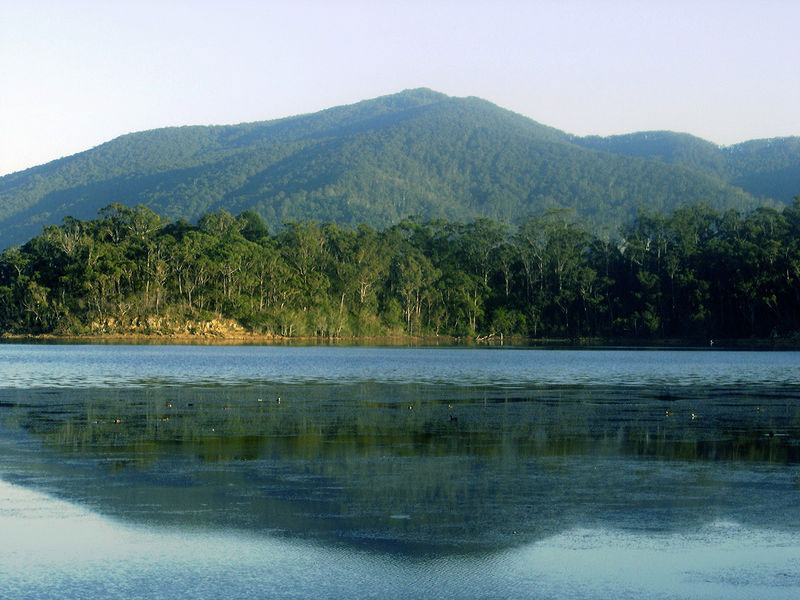
Mt Dromedary (Gulaga) near Tilba Tilba NSW. Credit: Renal Ride.
Gulaga (Mount Dromedary), New South Wales
Gulaga, also known as Mount Dromedary, is an isolated volcanic mountain on the New South Wales coast. It rises 797 metres above sea level near the historical villages of Tilba and Central Tilba.
The shape of the mountain resembles a dromedary camel. Gulaga was formed during volcanic activity about 100 million years ago.
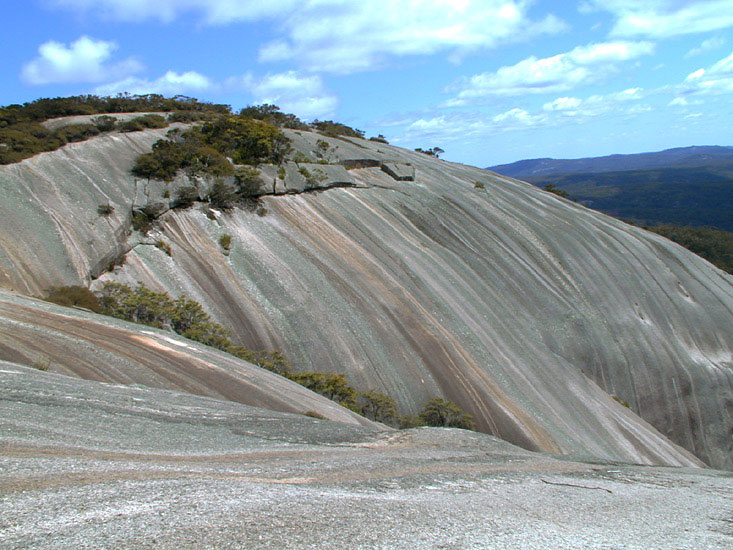
Bald Rock on the New South Wales/Queensland border
Bald Rock, New South Wales–Queensland border
Bald Rock is an inselberg, or isolated rock hill, on the New South Wales–Queensland border. It is said to be Australia's largest exposed granite surface.
The granite dome is about 200 metres above the surrounding bushland, 750 metres long, 500 metres wide and rises to 1 277 metres above sea level.
The granite that forms Bald Rock was emplaced into the surrounding older metamorphic and sedimentary rock about 247 million years ago. Subsequent uplift and erosion removed most of the surrounding sediments and metamorphic rocks, leaving Bald Rock exposed because of its resistance to weathering.
Oldest known rocks in each state and territory
The oldest known rocks identified in each Australian state and territory vary considerably in age, rock type and geological setting.
| State/Territory | Rock Unit and Location | Rock Type | Age (millions of years) | Geological Time (Era) | Reference |
|---|---|---|---|---|---|
| Western Australia | Meeberrie Gneiss, Murchison District | Gneiss | 3731 ± 4 | Eoarchean | Nutman A.P., Bennett V.C., Kinny P.D. and Price R. 1993. Large-scale crustal structure of the Northwestern Yilgarn craton, Western Australia: evidence from Nd isotopic data and zircon geochronology. Tectonics, 12:971-981. |
| South Australia | Cooyerdoo Granite, Eyre Peninsula | Granite | 3157 ± 2 | Mesoarchean | Fraser, G. L., McAvaney, S., Neumann, N. L., Szpunar, M. & Reid, A. Discovery of Early Mesoarchean crust in the eastern Gawler Craton, South Australia. Submitted to Precambrian Research. |
| Northern Territory | Kukalak Gneiss, West Arnhem Land | Gneiss | 2671 ± 3 | Neoarchean | Hollis, J.A., Carson, C.J. and Glass, L.M. (in press). SHRIMP U-Pb zircon geochronological evidence for Neoarchean basement in western Arnhem Land, northern Australia (in press). |
| Queensland | Yaringa Metamorphics, Mount Isa | Orthogneiss | 1874 ± 4 | Paleoproterzoic | Bierlein F.P., Black L.P., Hergt J. and Mark G. 2008. Evolution of Pre-1.8 Ga basement rocks in the western Mt Isa Inlier, northeastern Australia-Insights from SHRIMP U-Pb dating and in-situ Lu-Hf analysis of zircons. Precambrian Research 163:159-173. |
| New South Wales | Redan Gneiss, Broken Hill | Gneiss | 1710 ± 4 | Paleoproterzoic | Stevens, B. P. J., Page, R. W. and Crooks, A. (2008) 'Geochronology of Willyama Supergroup metavolcanics, metasediments and contemporaneous intrusions, Broken. |
| Tasmania | Surprise Bay Formation, King Island | Metasedimentary | ~1300 | Mesoproterozoic | Calver C.R. (2007) Some notes on the geology of King Island. Tasmanian Geological Survey Record 2007/02. |
| Victoria | Nothing formally defined with absolute radiometric ages; likely to be rare outcrops. | Unknown | ~600 | Believed to be Neoproterozoic | Cayley R.A., Taylor D.H., A. H. M. VandenBerg A.H.M. and Moore D.H. (2002). Proterozoic - Early Palaeozoic rocks and the Tyennan Orogeny in central Victoria: the Selwyn Block and its tectonic implications. Australian Journal of Earth Sciences 49:225-254. |
| Australian Capital Territory | Adaminaby Beds, Brindabella Ranges | Sedimentary | ~470 | Ordovician | Finalyson D.M. (Ed.) 2008. A geological guide to Canberra Region and the Namadgi National Park. Geological Society of Australia (ACT Division), 140 p. |
The table reflects Geoscience Australia's assessment as at October 2009. Older rocks may subsequently have been identified.