Tsunami research reports
Cities Project Perth — Tsunami Appendix
Even before the Sumatran earthquake and tsunami on 26 December 2004, it was recognised in Cities Project Perth that Indonesian tsunami could have significant impacts in Western Australia, including on the Perth coastal region. As a consequence an appendix on tsunami hazard potential for Western Australia provides an overview of the historical impacts of tsunami in Western Australia and comments on the potential for future impacts on the State's south west coastal communities. More>>
Hydrodynamic Modelling of Coastal Inundation
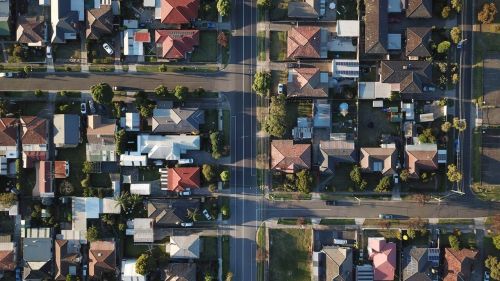
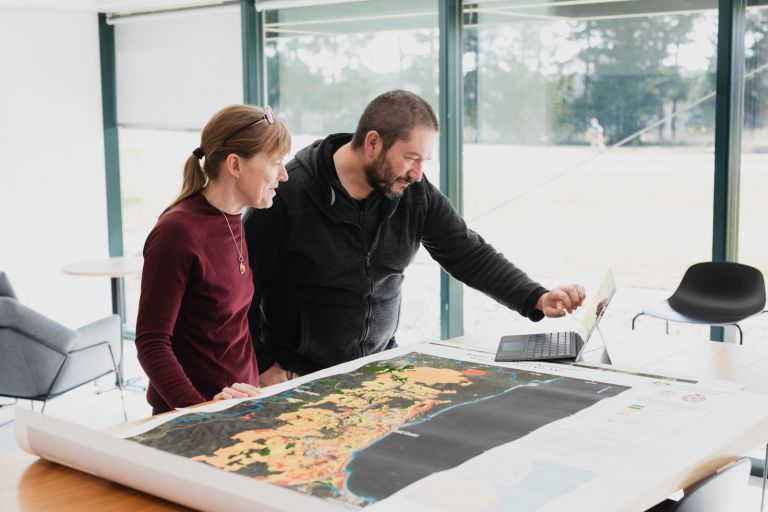
Modelling the effects on the built environment of natural hazards such as riverine flooding, storm surges and tsunami is critical for understanding their economic and social impact on urban communities. Geoscience Australia and the Australian National University are developing a hydrodynamic inundation modelling tool called ANUGA to help simulate the impact of these hazards.
Andaman-Sumatra earthquake - 2004
Hundreds of aftershocks have followed the Andaman-Sumatra earthquake on 26 December 2004. The magnitude 9.0 earthquake occurred where the Indo-Australian plate is being subducted under the Eurasia Plate. This subduction zone stretches from Burma in the west to West Irian Jaya in the east.
Aitape Earthquake and Tsunami - 1998
Just before 7pm on Friday 17 July 1998, a magnitude 7.0 earthquake rocked the north coast region of Papua New Guinea. The Aitape tsunami resulted in more than 2,000 deaths, caused extensive damage to houses and public infrastructure and altered the environment around the village. A proposal to monitor aftershocks and provide advice to the Papua New Guinea and Australian governments was prepared by scientists from the Papua New Guinea Geological Survey and the forerunner to Geoscience Australia, the Australian Geological Survey Organisation. It was submitted to the two governments by the Australian aid agency, AusAID.
AusGeo News Articles
March 2009 Scientific expertise and emergency management
- Scientific expertise and emergency management
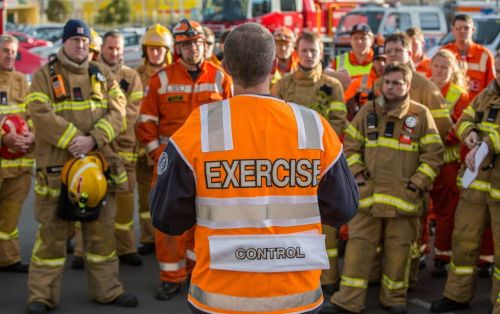
Successful collaboration with state and Australian Government emergency management agencies using scientific analysis to assess tsunami impact to underpin planning and preparation activities.
March 2008 Tsunami: Graduate project strengthens community ties
March 2008 Tsunami: Spatial Excellence Award for tsunami modelling
March 2007 Operations Hub in Action for Australian Tsunami Warning System
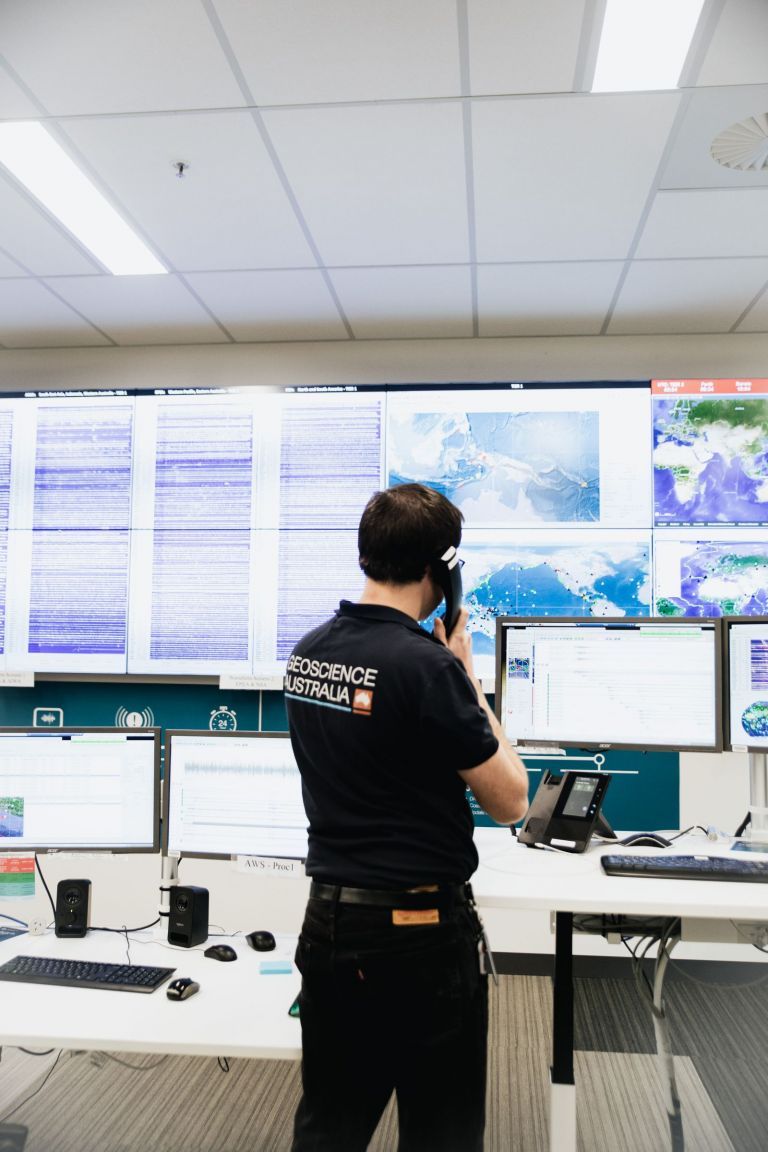
The Operations Hub for Geoscience Australia's new Australian Tsunami Warning Centre (AusTWC) was officially opened on Friday 1 December 2006
September 2006 Modelling Answers Tsunami Questions
Geoscience Australia aims to define the economic and social threat posed to urban communities by natural hazards such as tsunami
September 2006 Echoes of Ancient Tsunami
Geological signatures of tsunamis provide clues to tsunami hazards which are unknown or poorly understood from anecdotal and instrumental records alone
December 2005 Crustal Deformation from the Sumatra-Andaman earthquake
The Global Positioning System (GPS) and a global network of receivers now allows the detection of ground motion at the millimetre to centimetre level before, during and after earthquakes.
June 2005 Geoscience Australia's role in the Australian Tsunami Warning System
In the 2005-2006 Federal Budget handed down on 10 May the Australian Government announced the creation of the Australian Tsunami Warning System.
March 2005 The Boxing Day Tsunami - Echoes of 1833
An article in the September 2004 issue of AusGeo News discussed how massive earthquakes in the Sumatra subduction zone have the potential to cause tsunamis large enough to affect the entire Indian Ocean basin.
September 2004 Small threat but warning sounded for tsunami research
There is an international tsunami warning system for the Pacific Ocean, but none for the Indian Ocean. How vulnerable is Australia to the risk of tsunami and are we leaving our western coastal communities exposed?
Geoscience Australia Library Catalogue
The Geoscience Australia Library is the premier geoscience library in Australia. Established in 1946, the library has an extensive collection of earth sciences material and is open to the public. More>>
- Search the Library for Tsunami titled books and reports.
- General Catalogue Search
- Library Services and Access
- Library Contact Information
External Research Links
- Bureau of Meteorology - Tsunami Information
- A first-generation real-time tsunami forecasting system for the Australian Region.
- A Probabilistic Tsunami Hazard Assessment for Western Australia
- Assessing the threat to Western Australia from tsunami generated by earthquakes along the Sunda Arc
- DEST - Tsunamis: Does anybody have to die?
- Fire and Emergency Services (FESA) Western Australia - Tsunami Information
- Historic records of teletsunami in the Indian Ocean and insights from numerical modelling
- Medieval forewarning of the 2004 Indian Ocean tsunami in Thailand
- The Effect of the Great Barrier Reef on the Propagation of the 2007 Solomon Islands Tsunami Recorded in Northeastern Australia
- The potential for giant tsunamigenic earthquakes in the northern Bay of Bengal
- The relationship of the seismic source and subduction zone structure for the 2004 December 26 Sumatra–Andaman earthquake
- Tsunami Information Sources
- Tsunami planning and preparation in Western Australia: application of scientific modelling and community engagement
BMRC Research Report No. 126, Bur. Met. Australia.(Greenslade, D.J.M., Simanjuntak, M.A., Burbidge, D. and J. Chittleborough, 2007.)
David Burbidge, Phil .R. Cummins, Richard Mleczko, Hong Kie Thio, Pure and Applied Geophysics, DOI 10.1007/s00024-008-0421-x, 2008.
David Burbidge and Phil Cummins, 2007. Natural Hazards, 10.1007/s11069-007-9116-3.
Report of the working group on tsunami to the prime minister's science, engineering and innovation council 2 December 2005. Department of Education, Science and Training (DEST).
The Indian Ocean tsunami of 2004 has resulted in significant interest within Australia about the record of tsunami for the continent because an understanding of tsunami hazard begins with a catalogue of past events
Dale Dominey-Howes, Phil Cummins and David Burbidge, 2006. Natural Hazards, 10.1007/s11069-006-9042-9.
Kruawun Jankaew, Brian F. Atwater, Yuki Sawai, Montri Choowong, Thasinee Charoentitirat, Maria E. Martin & Amy Prendergast, Nature 445, doi:10.1038/nature07373, 2008.
Toshitaka Baba, Richard Mleckzo, David Burbidge, Phil R. Cummins, Hong Kie Thio, Pure and Applied Geophysics, DOI 10.1007/s00024-008-0418-5, 2008.
Phil R. Cummins, Nature 449, 75-78, doi:10.1038/nature06088, 2007.
B.L.N. Kennett, and P.R. Cummins, 2005. Earth and Planetary Science Letters. 239, 1-2, p1-8.
Robert L. Wiegel, 2006. International Journal of the Tsunami Society, volume 24, number 2.
An extensive list of tsunami information sources from tsunami generation, propagation, effects of nearshore bathymetry, wave run-up on shore, and physical and numerical modelling.
R. Stevens, G. Hall and J. Sexton, 2008. Australian Journal of Emergency Management, 23, 4, p30-36.
Further Reading
Related Websites
- Emergency Management Australia - Tsunami-Get the Facts
- Emergency Management Australia - Australian Tsunami Warning System
- Emergency Management Australia - Library
- Emergency Management Australia - Australian Tsunami Warning System Publications
- Pacific Tsunami Warning Centre
- Japan Meteorological Agency - Tsunami Warnings
- Alaska Tsunami Warning Centre
- International Tsunami Information Centre
- National Oceanic and Atmospheric Administration - Tsunamis
- Russian Tsunami Laboratory