Powered by elements beneath our feet: How critical minerals help us get from A to B
Page last updated:7 October 2026
Next time you board a plane, spare a thought for the critical minerals working behind the scenes – in the aircraft, beneath your feet and up in space, helping make your journey possible.
You might be surprised to learn just how many critical minerals are used in aerospace technology. Some of those critical minerals are rare earth elements (or REE). These REE are used in advanced aerospace technologies, because their unique magnetic, thermal and electronic properties enable high-performance components such as jet engine systems, satellite communications and guidance systems.
As of 2025, Australia has the third-largest resource of rare earth elements (REE) in the world (approximately 5 per cent of global resources) and is the fourth-largest producer of REE (around 8 per cent of global production). As one of the world’s largest holders and producers of REE, Australia is well placed to support the growing global demand for the critical minerals that power aerospace technologies as well as clean energy and advanced manufacturing.
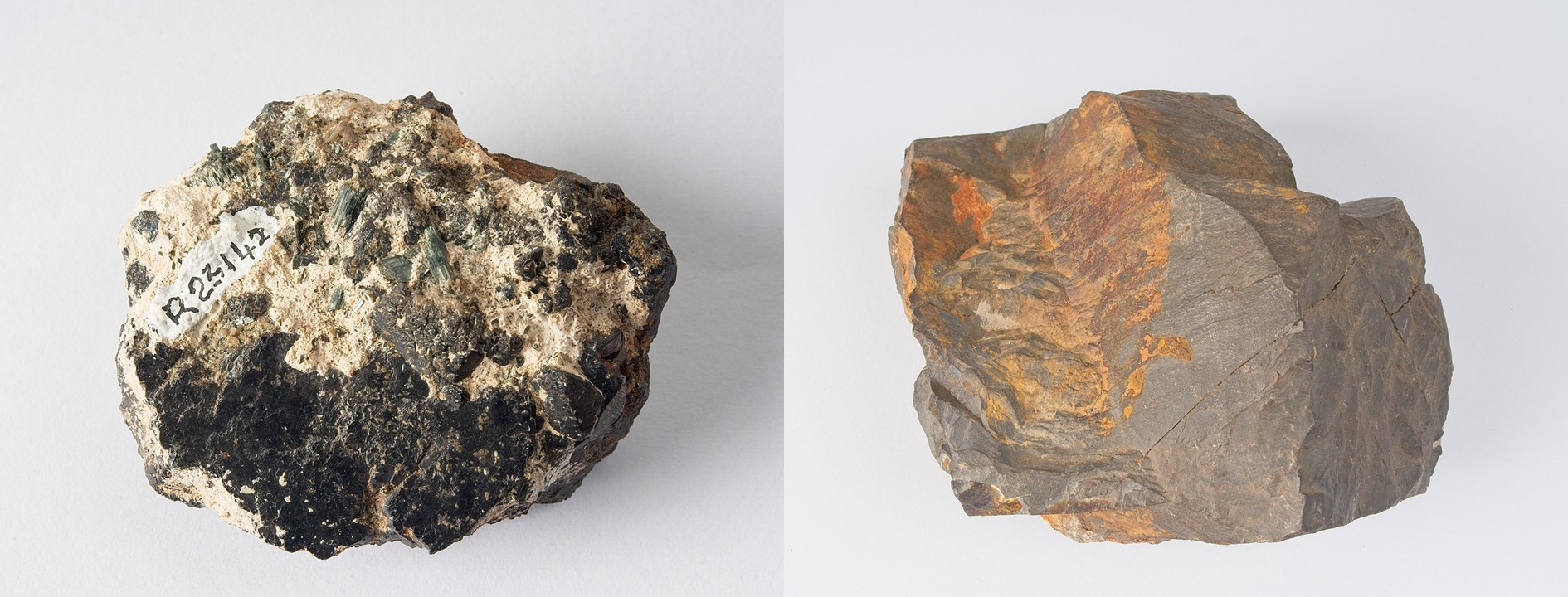
Titanium is often found in nature as oxides in minerals such as ilmenite (above left, Moonta, South Australia) and Rutile (above right, Mt. Perry, Queensland). Image copyright Geoscience Australia CC 4.0.
Aircraft, GPS navigation and satellite systems rely on critical minerals
Critical minerals such as titanium, beryllium, tungsten, cobalt, nickel, and REE play indispensable roles in propulsion systems, high-temperature alloys, radar systems and space-grade materials on a modern plane.
Silicon, produced from special types of very pure quartz, is crucial for keeping you safe on board too. It is used in aircraft insulation and in engine compartments to protect critical components from extreme heat and fire hazards.
Have you heard of quantum sensing devices? They are critical to modern aerospace navigation. Quantum sensors provide precise navigation as a reliable alternative to Global Positioning System (GPS) signals. These sensors work by measuring the Earth’s magnetic field and gravity to accurately determine acceleration, rotation and position.
While modern aviation relies heavily on GPS, aircraft using quantum sensors can fly in areas with no GPS coverage and can navigate challenging terrains and adverse weather conditions safer. This technology relies on rare earth elements such as ytterbium, europium, dysprosium and neodymium, whose unique properties enable highly sensitive sensors to detect tiny variations in gravity. These measurements can be used to identify features on and hidden beneath the Earth's surface with remarkable precision.
It's not just the high-performance critical minerals in the plane that make your flight smoother. Satellite navigation systems also rely heavily on these mighty minerals. Neodymium and europium (2 of the 15 REE) are used to make permanent magnets for orientation control systems and to produce vibrant colours on digital screens.
Why these mighty minerals matter to Australia
Critical minerals are not just important to aircraft and satellites, they are increasingly central to Australia’s economic security, technology future and transition to cleaner energy.
Australia has significant critical mineral resources, including REE, which are essential for advanced manufacturing, renewable energy technologies, defence, transport, space systems and everyday digital devices. As global demand grows, understanding where these minerals occur, how they can be responsibly developed and how they support modern technologies is becoming increasingly important.
For Australia, this creates both the opportunity and responsibility to better understand our mineral potential (the likelihood that a geographic area contains economically valuable mineral deposits, assessed using geoscience data and predictive mapping techniques), support resilient supply chains, and ensure decisions about exploration and development are informed by trusted national geoscience.
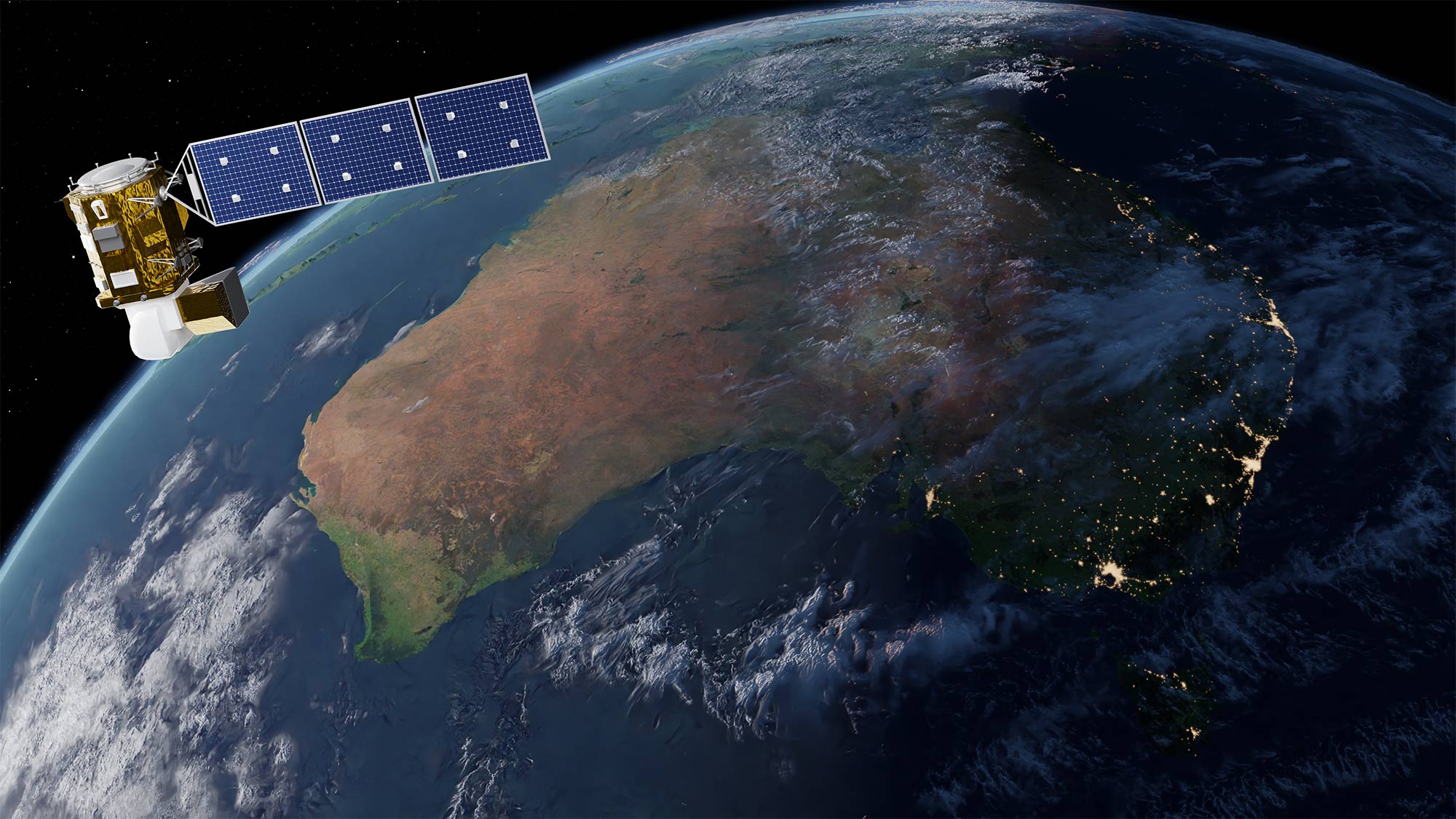
Landsat 8-9 over Australia. Image credit: Geoscience Australia.
How Geoscience Australia contributes
Geoscience Australia helps build the national understanding needed to support Australia’s critical minerals future.
Through the Resourcing Australia’s Prosperity initiative, Geoscience Australia is collecting and analysing new geoscience data across underexplored parts of the country. This includes techniques such as Airborne Gravity Gradiometry, which measures subtle changes in the Earth’s gravity field from the air to help reveal geological structures that may be associated with critical mineral systems that are hidden beneath the surface. This helps us map and understand historically under-mapped regions for critical minerals.
Critical minerals also support the technologies Geoscience Australia uses and delivers. SouthPAN, the Australian Government's joint Southern Positioning Augmentation Network, relies on critical minerals in satellites and the data receivers on Earth to provide improved positioning and navigation services in Australia and New Zealand.
Critical minerals are vital for Earth observation too, including Geoscience Australia's Landsat Next collaboration with the USA. Earth observation is the use of satellites and airborne technologies to collect information about our planet, helping us monitor landscapes, manage natural resources, respond to disasters and better understand environmental change. Since its first mission launch in 1972, Landsat has been crucial for Australia, providing a space-based record of Earth’s land surface.
Our work uses space-based and airborne technologies to help Australia better understand what lies beneath our feet, deliver information that supports safer transport, stronger industries and make better informed decisions and critical minerals play a big part in making this all happen.
So, next time you look up and watch an aircraft arc across the sky, spare a thought for the minerals beneath your feet that help make the journey possible.