Carbon Capture and Storage (CCS)
Page last updated:15 June 2026
Carbon capture and storage (CCS) is recognised as one of the key carbon management technologies or measures that can help reduce human-made carbon dioxide (CO2) emissions to the atmosphere. CCS integrates a range of technologies in the following areas:
- Capture of CO2 from industrial sources
- Transport of CO2 by pipeline, road or ship
- Permanent, secure storage of CO2 in rocks deep underground
While initiatives to increase uptake of renewable energy, energy efficiency and fuel switching help prevent CO2 emissions from being created, CCS addresses emissions that are difficult or impossible to avoid, such as those from industrial processes like cement manufacturing, ethanol production and the production of liquefied natural gas.
The geological storage component of CCS also plays an important role in Carbon Dioxide Removal (CDR), where CO2 is extracted directly from the atmosphere and permanently stored deep underground.
Geoscience Australia has had an active role in CCS for over 25 years, with a primary focus on ‘Storage’ – including geological storage, greenhouse gas monitoring and verification, provision of technical advice, and outreach and education. Our work is closely aligned with or funded through the Department of Industry, Science and Resources, the Department of Climate Change, Energy, the Environment and Water, and key research organisations such as CSIRO and CO2CRC.
Navigate through these pages to find out more about our work on CCS, including our key publications and data releases.

Carbon capture and storage takes carbon dioxide and injects it deep underground.

Our current Carbon Capture and Storage projects.
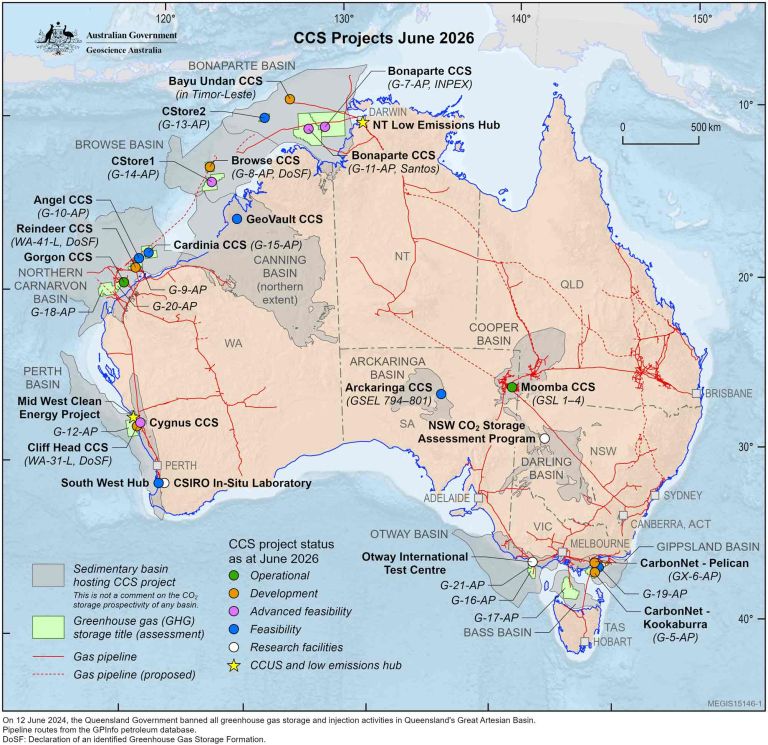
In Australia, there are currently several significant CCS projects in various stages of operation and development.
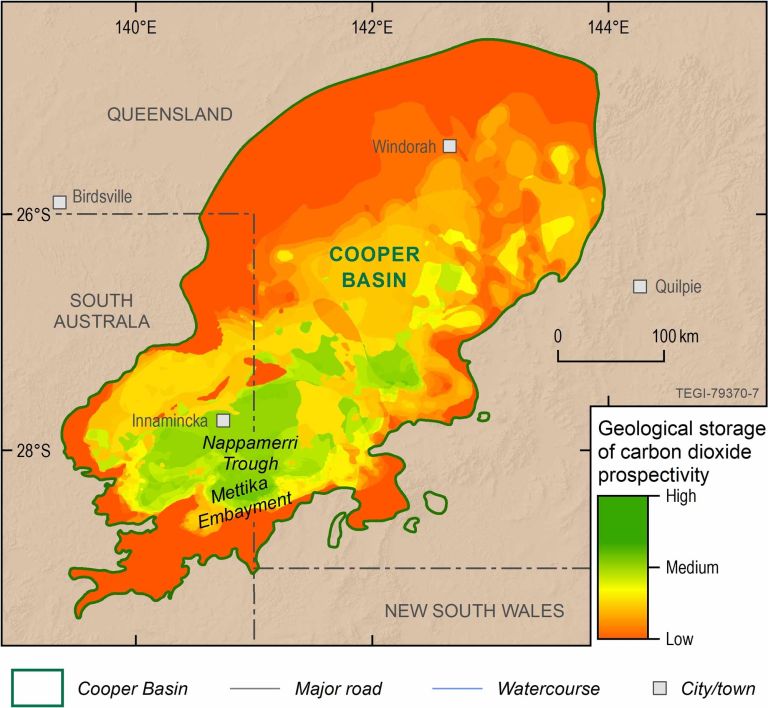
Studies to identify and assess Australia’s potential and capacity to store carbon dioxide in our sedimentary basins.
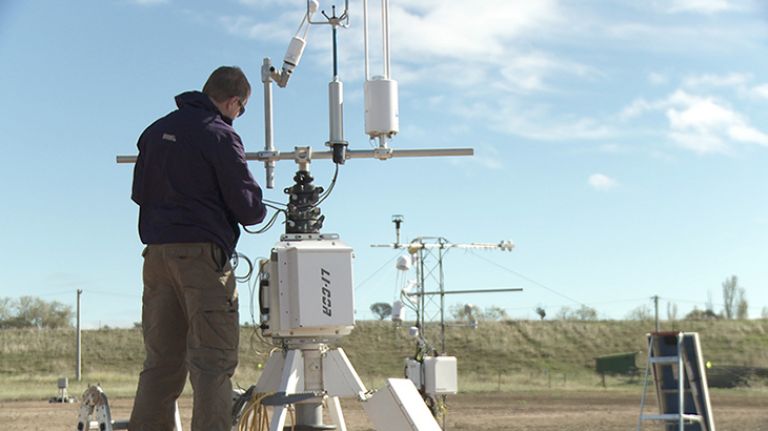
Geoscience Australia worked with a number of organisations to develop and test techniques and tool to detect and quantify CO2

We work closely with State and Territory Geological Surveys, CSIRO, Universities, Federal and State Government Departments, industry, and international agencies and organisations.