Australia's Energy Commodity Resources 2025 Carbon capture and storage
Page last updated:23 October 2025
Carbon Capture and Storage
|
TDR 674 Mta ( 67%) | |
|
Sub-commercial storage resources
31 Gtb (-) |
|
Storage Projects 18 announced ( 13%) - 2 operational - 5 in development - 11 in feasibility stage |
|
Stored >10 Mtc ( 15%) |
Notes
Statistics as of December 2024; a carbon dioxide (CO2) geological storage reserves and resources; b sub-commercial storage resources estimate includes 30 Gt for which a project has not been specified, further exploration and appraisal work is required to determine how much of this potential resource can be used for commercial storage operations; c cumulative CO2 stored geologically. TDR = Total demonstrated resources (storage capacity and contingent resources); Mt = million tonnes; Gt = gigatonnes.
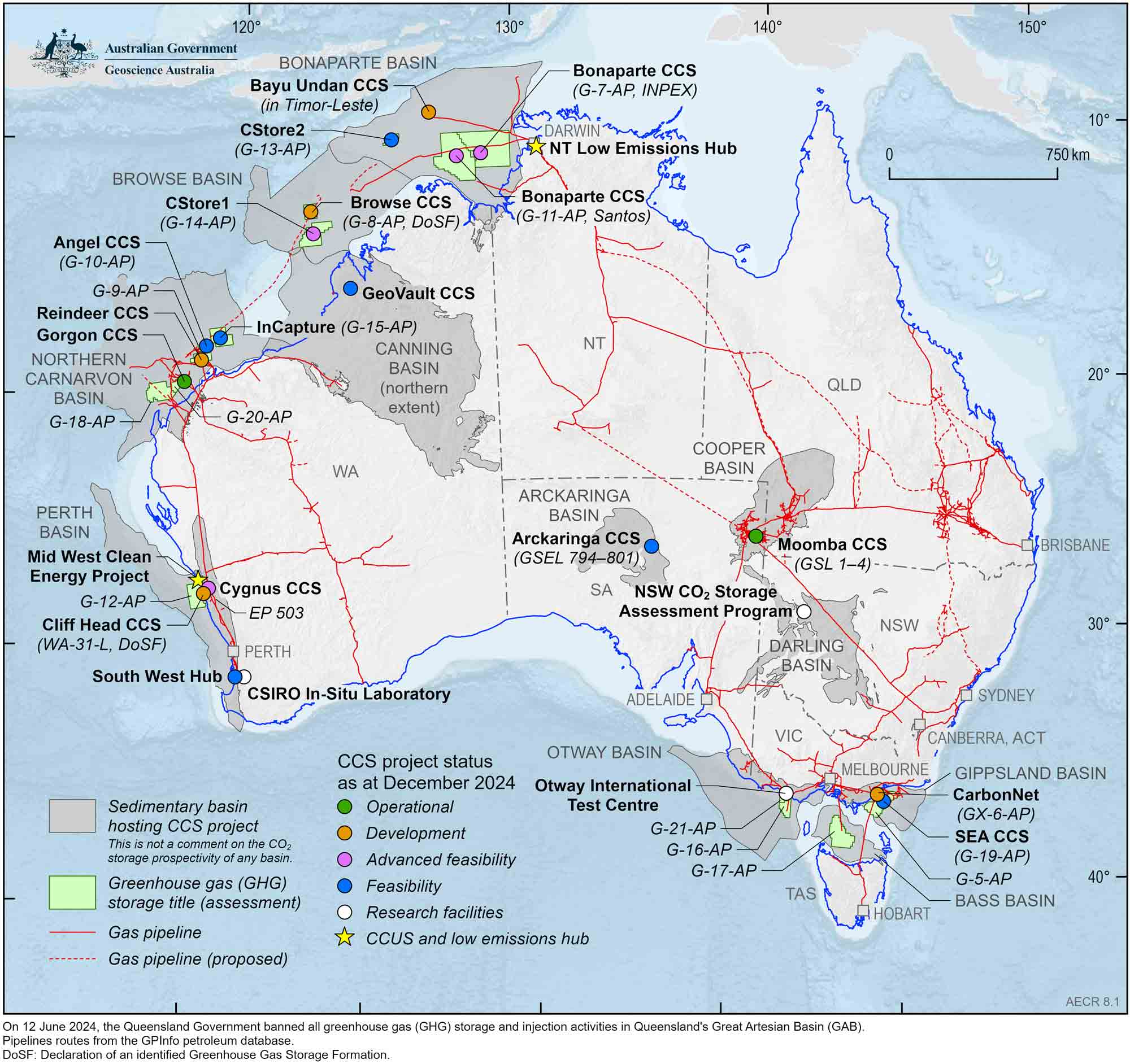
Figure 8.1 Location of Australian CCS Projects within their host sedimentary basin (as of December 2024). Only those projects that include a geological storage component are shown.
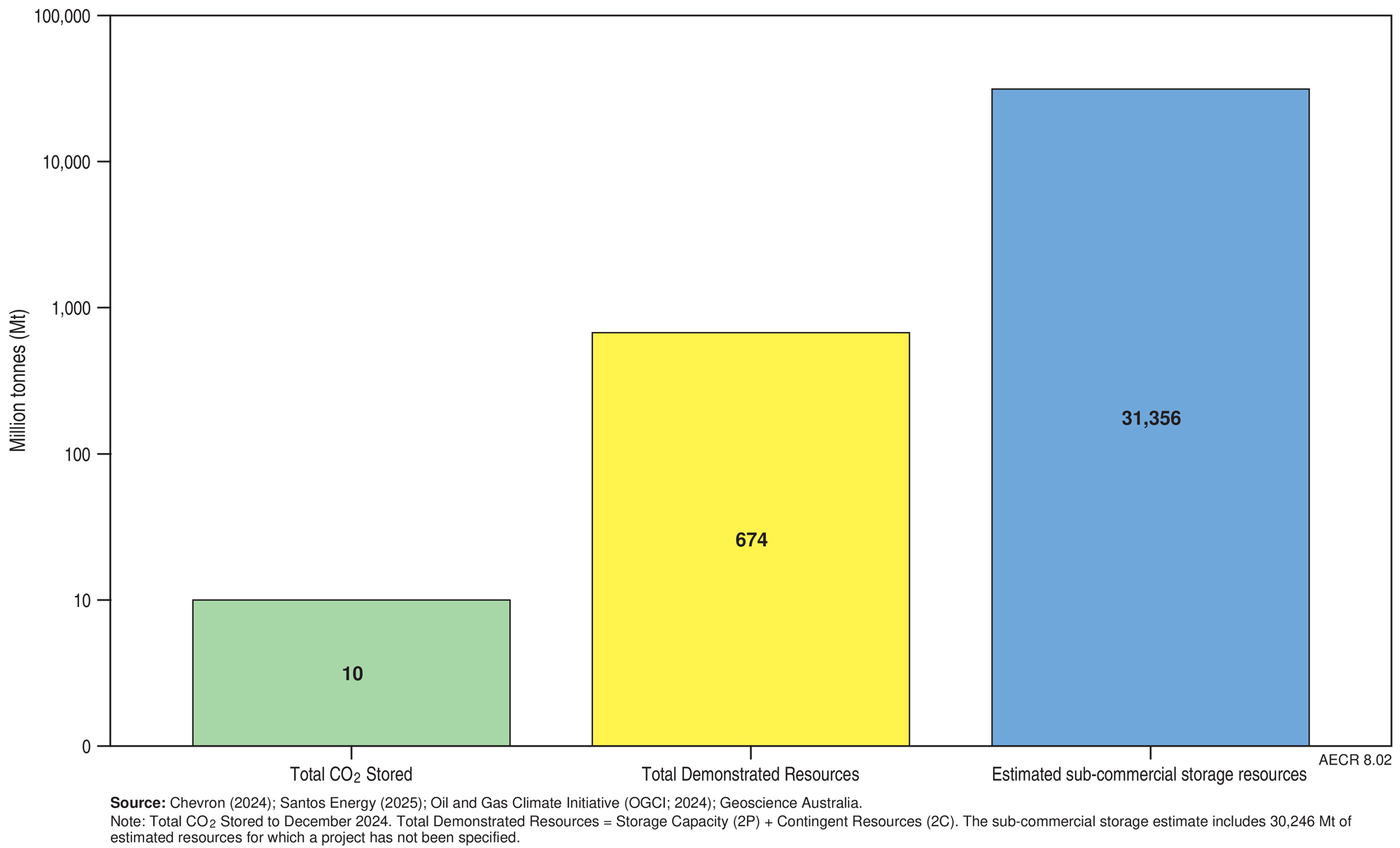
Figure 8.2 Australia’s CO2 storage resources.
Highlights
- The Gorgon CCS project was Australia’s first operating commercial CCS facility, and as of July 2025 had stored more than 11 million tonnes (Mt) of CO2 in the Dupuy Formation, beneath Barrow Island.
- Moomba CCS became Australia’s second operational commercial scale CO2 storage project in October 2024 and stored 340,000 tonnes of CO2-equivalent by the end of 2024. Phase 1 of the Moomba CCS facility will store up to 1.7 million tonnes per annum (Mtpa). As of July 2025 the project has stored more than 1 Mt of CO2-equivalent.
- As of December 2024, there were 16 CO2 storage projects in some stage of development, largely offshore (Figure 8.1), and 17 active offshore Commonwealth Greenhouse Gas Assessment Permits in place, representing a total commitment of nearly A$1 billion over the primary and secondary terms. Two projects have achieved a Declaration of Identified Greenhouse Gas Storage Formation (DoSF).
- Legislation and/or regulatory frameworks enabling greenhouse gas storage are now in place in South Australia, Victoria, Western Australia, Queensland and the Commonwealth (offshore) jurisdiction.
- The Government of Western Australia published its CCUS Action Plan in November 2024 and the NT Government are working to develop a CCUS Hub in Middle Arm Precinct and to construct a CO2 import terminal in Darwin.
- The Queensland Government banned all greenhouse gas storage and injection activities in the state’s portion of the Great Artesian Basin on 12 June 2024.
Carbon Capture and Storage (CCS) or carbon capture, utilisation and storage (CCUS) is part of a suite of tools that prevents the release of CO2 from stationary greenhouse gas (GHG) emission sources and can be used to store CO2 that has been directly removed from the atmosphere. The CCS value chain includes capturing, transporting, compressing, and injecting CO2 into deep underground geological formations, where it is permanently trapped (Figure 8.3). CCS is a potential pathway for reducing emissions from hard-to-abate sectors including the production of iron, steel, aluminium, and cement and chemical manufacturing, as well as from natural gas processing and methane based hydrogen production. Globally, around 46 commercial-scale CCS projects capture around 50 Mtpa of CO2 (IEA, 2025). Of these, some 14 have dedicated geological storage for carbon abatement, while the remainder are utilisation projects largely storing CO2 through enhanced oil recovery operations (IEA, 2024). According to the Global CCS Institute (2024), in 2024 there were 44 CCS facilities under construction and a further 534 in development (up from 325 last year).
CCS also underpins direct removal and permanent geological sequestration of CO2 from the atmosphere through direct air capture and storage (or DACS), which is expected to play an increasingly important role in meeting the global carbon budget (IEA, 2022). Nearly 30 small scale DACS projects have been commissioned across the world (IEA, 2024).
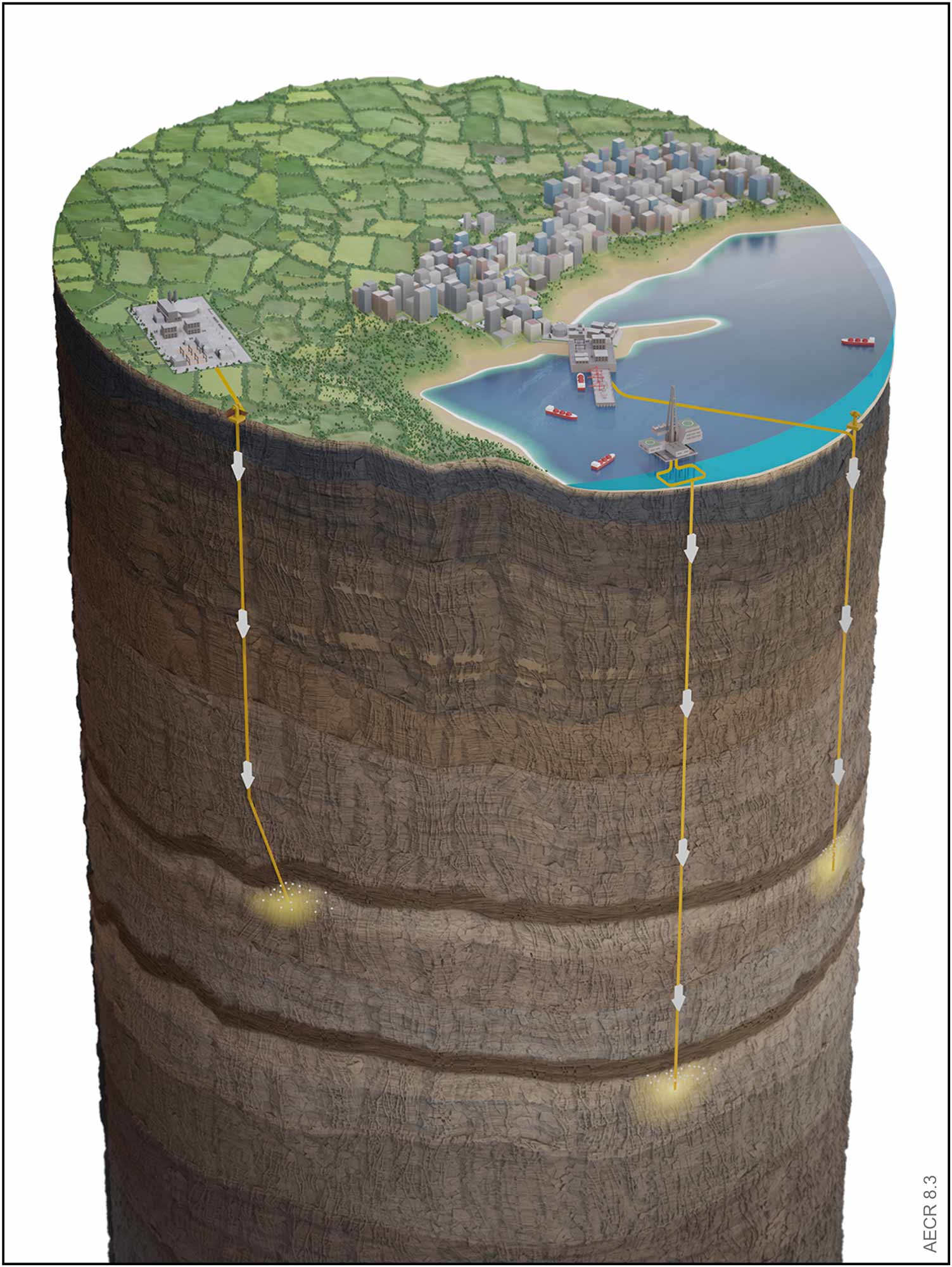
Figure 8.3 CCS includes capturing, transporting, compressing, and injecting CO2 into deep underground geological formations where it is permanently trapped.
CCS in Australia
In May 2024 the Australian Government released the Future Gas Strategy, which recognises the need for natural gas beyond 2050 in Australia (DISR, 2024). The strategy also underlines the increasing role for CCS in Australia with respect to decarbonising natural gas operations and the hard-to-abate industrial sector.
Australia has excellent potential for the application of CCS, with many onshore and offshore basins hosting suitable formations for the injection and storage of CO2. There are hydrocarbon fields in many basins that are at mature stages of development which provide early opportunities for CCS in their depleted reservoirs.
There are two operating commercial-scale full-chain capture and storage projects in Australia—Gorgon CCS in Western Australia, and Moomba CCS in South Australia—and two operational research and demonstration facilities, Otway International Test Centre in Victoria and the CSIRO In-Situ Laboratory in Western Australia. Beside this, there is a growing number of commercial-scale projects that are at various stages of planning and development, both onshore and offshore (Figure 8.1; Table 8.1).
As of December 2024, there are 17 active offshore Commonwealth Greenhouse Gas Assessment Permits located in the Bonaparte, Browse, Northern Carnarvon, Perth, Otway, Bass and Gippsland basins (Figure 8.1). The total work program commitment for these areas (primary and secondary phase) amounts to nearly A$1 billion (NOPTA, 2024a).Two projects achieved a Declaration of Identified Greenhouse Gas Storage Formation (DoSF) in 2024—Calliance, located in Greenhouse Gas Assessment Permit G-8-AP, and Cliff Head, located in Petroleum Production Licence WA-31-L (NOPTA, 2024b).
Enabling regulatory framework
Offshore CCS projects in Commonwealth waters are conducted under the Offshore Petroleum and Greenhouse Gas Storage (OPGGS) Act 2006, the Environment Protection (Sea Dumping) Act 1981 and the Environment Protection and Biodiversity Conservation Act 1999 (the regulatory frameworks and approvals governing offshore CCS projects are described in Australian Government 2023 guidance document). For further information, refer to the Department of Industry, Science and Resources and Department of Climate Change, Energy, the Environment and Water.
An Australian Government review of the Offshore Petroleum and Greenhouse Gas Storage Act 2006 and the Offshore Petroleum and Greenhouse Gas Storage (Environment) Regulations 2023, led by the Department of Industry, Science and Resources (DISR), was underway in 2024. This review aims to examine and recommend improvements to the offshore environmental management regime. Additionally, the Department of Climate Change, Energy, the Environment and Water released the Interim National Action List in 2024 and the final National Action List for public consultation in 2025), together with the Sea Dumping Permit Application Form (DCCEEW, 2025).
Onshore projects are governed under equivalent state or territory legislation. South Australia, Victoria, and Queensland have had enabling legislative frameworks in place for a number of years, noting that on June 12 2024, the Queensland Government banned all greenhouse gas storage and injection activities in Queensland's Great Artesian Basin (GAB). In May 2024, the Western Australian Parliament passed the Petroleum Legislation Amendment Bill 2023 that enables the transport and storage of greenhouse gases as well as exploration for naturally-occurring hydrogen. In late 2025, the Department of Mines, Petroleum and Exploration (DMPE) sought public comment on the draft Petroleum, Geothermal Energy Greenhouse Gas (Greenhouse Gas Injection and Storage & Submerged Lands) Regulations 2025.
CCS Projects
There are currently 18 geological storage projects across Australia, two of which are operational. The projects are mainly located in the Commonwealth jurisdiction offshore Northern Territory, Western Australia and Victoria, and onshore in South Australia (Table 8.1, Figure 8.1). Both saline aquifers and depleted fields are suitable targets for storage.
Table 8.1 CO2 storage projects announced for Australia (to December 2024).
| Project | Basin/location | Operators and partners | Storage Type | Status | Estimated scale | Start date |
|---|---|---|---|---|---|---|
|
Angel CCS G-10-AP | Carnarvon | Woodside Energy, BP, MIMI, Shell, Chevron Australia | Depleted field | Feasibility | Up to 5 Mtpa (est) | |
|
Arckaringa CCS GSEL 794 - 801 | Arckaringa | Australian Carbon Vault | Saline aquifer, coal beds | Feasibility | ||
| Bayu Undan |
Bonaparte, in the jurisdiction of Timor Leste | Santos, SK E&S, INPEX, ENI, Tokyo Timor Sea Resources, TIMOR GAP | Depleted field | Development | 2.3 | 2028 |
|
Bonaparte CCS (INPEX) G-7-AP | Bonaparte | INPEX Browse E&P, Total Energies CCS Australia, Woodside Energy | Saline aquifer | Advanced Feasibility | 2.5 - 10 Mtpa | 2030 |
|
Bonaparte CCS (Santos) G-11-AP | Bonaparte | Santos, Chevron Australia, SK E&S | Saline aquifer | Advanced Feasibility | ||
|
Browse CCS G-8-AP | Browse | Woodside Energy, Shell, BP, MIMI, PetroChina |
Depleted field, saline aquifer | Development | 4 Mtpa | |
|
CarbonNet GX-6-AP, G-5-AP | Gippsland | Victorian Government, Australian Government | Saline aquifer | Development |
up to 6 Mtpa (168 Mt at Pelican) | 2030 |
|
Cliff Head CCS (Mid West Clean Energy Project) WA-31-L | Perth | Pilot Energy | Depleted field | Development |
> 1 Mtpa (50 Mt) | 2026 |
|
Cstore1 G-14-AP | Browse | deepCStore, ABL Group, CSIRO, JX Nippon Oil and Gas Exploration, Kyushu Electric Power, Mitsui O.S.K Lines, Osaka Gas, Technip Energies, Toho Gas | Depleted oil fields and saline aquifers | Advanced Feasibility | 1.5 - 7.5 Mtpa | |
|
Cstore2 G-13-AP | Bonaparte | deepCStore, ABL Group, CSIRO, JX Nippon Oil and Gas Exploration, Kyushu Electric Power, Mitsui O.S.K Lines, Osaka Gas, Technip Energies, Toho Gas | Depleted oil fields and saline aquifers | Feasibility | 1.5 - 7.5 Mtpa | |
| Cygnus CCS | Perth | Mitui E&P Australia, Wesfarmers Chemicals, Energy & Fertilisers | Depleted field | Advanced Feasibility | 0.5 Mtpa | |
| GeoVault CCS | Carnarvon | Buru Energy, Energy Resources | Saline aquifer | Feasibility | ||
| Gorgon CCS | Carnarvon | Chevron Australia, ExxonMobil, Shell, Osaka Gas, Tokyo Gas, JERA | Saline aquifer | Operational |
>100 Mt (>10 Mt stored to end 2024) | 2019 |
|
InCapture G-15-AP | Northern Carnarvon | InCapture Pty Ltd, Carbon CQ Pty Ltd, SK earthon Australia | Saline aquifer | Feasibility | 2030's | |
|
Moomba CCS GSL 1-4 | Cooper | Santos, Beach Energy | Depleted field | Operational |
1.7 Mtpa (0.34 Mt stored to end 2024, up to 20 Mtpa) | 2024 |
| Reindeer CCS | Carnarvon | Santos, Chevron Australia |
Depleted field, saline aquifer | Development | 5 Mtpa | 2028 |
|
SEA CCS G-19-AP | Gippsland | Esso Australia (ExxonMobil), BHP Petroleum (Woodside Energy) | Depleted field | Feasibility | 2 | 2026-27 |
| South West Hub | Perth | Western Australian Government, Verve Energy, Griffin Energy, Wesfarmers Premier Coal, Alcoa Australia, Perdaman Chemicals & Fertilisers | Saline aquifer | Feasibility | 0.8 Mtpa | |
| Otway International Test Centre | Otway | CO2CRC |
Saline aquifer, depleted field | Research Facility |
Research (0.1 Mtpa stored) | 2008 |
| CSIRO In-Situ Laboratory | Perth | CSIRO, Western Australia Department of Energy, Mines, Industry Regulation and Safety (WA DEMIRS) and the Research Institute of Innovative Technology for the Earth (RITE). | Saline aquifer | Research Facility | ||
|
NSW CO2 SAP EL8065, EL8066 | Darling | Coal Innovation NSW, Department of Regional NSW |
Research (precompetitive drilling) | |||
| NT Low Emissions Hub | Darwin | CSIRO, Northern Territory Government, Xodus, INPEX, Santos, Woodside Energy, Eni, Total Energies, SK E&S and Tamboran Resources | CCUS & low emissions Hub | |||
| Mid West Clean Energy Project | Mid-west WA | Pilot Energy | CCUS & low emissions Hub | 2026 |
Abbreviations
Mt = Million tonnes.
Notes
Only projects directly undertaking geological storage projects are included here. For detailed descriptions of CO2 geological storage projects in Australia, please refer to Geoscience Australia’s CCS projects database that is updated quarterly. Sources: Geoscience Australia, 2025.
The majority of Australia’s announced CO2 storage projects are associated with the production of natural gas/LNG. Natural gas can contain significant concentrations of CO2 (>10%). Conventionally, CO2 separated from natural gas has been vented into the atmosphere. However, this approach is facing increasing scrutiny due to its contribution to greenhouse gas emissions and as emission reduction requirements under legislation such as the Safeguard Mechanism come into effect (DCCEEW, 2023). Australian CO2 storage projects in development also include industrial emission sources and those linked with hydrogen and ammonia production.
The Gorgon CCS project on Barrow Island, Western Australia, is Australia’s first operating commercial-scale CCS project. The CO2 associated with natural gas from the Gorgon and Jansz-Io fields is captured and stored in the Upper Jurassic Dupuy Formation in the Barrow Sub-basin, around 2,000 m beneath Barrow Island. The project has stored in excess of 11 Mt of CO2 between the commencement of injection in August 2019 and July 2025, and is expected to store more than 100 Mt of CO2 during its 40-year plus lifetime (Chevron, 2025).
Santos’ Moomba CCS facility began injecting CO2 in September 2024 and has stored 1 Mt of CO2-equivalent to July 2025 (Santos, 2025). The project involves CO2 separation and capture from the Moomba gas processing plant, dehydration, compression, transport and injection via four wells into the Marabooka and Strzelecki depleted fields in the Cooper Basin for permanent storage. The project is storing CO2 at rate of 1.7 Mtpa at a cost of less than US$30 per tonne.
There is an increasing focus on the development of CCS hubs based on or in addition to CO2 storage projects associated with LNG production that will enable geological storage of emissions from hydrogen and ammonia production as well as from industrial and hard-to-abate facilities. Examples of these are the Northern Territory Low Emissions Hub, at the Middle Arm industrial precinct; Pilot Energy’s Mid West Clean Development Hub; and the CarbonNet CCS hub in Victoria. DeepC Store are developing Australia’s first multi-user floating CO2 injection and storage hub, which will be located offshore in northern and western Australia and store between 1.5–7.5 Mt CO2 per year (DeepC Store, 2024).
The passage of the 2023 amendment to the Environment Protection (Sea Dumping) Act (1981) to enable transboundary movement of CO2 for the purpose of sub-seabed storage is also generating interest from both potentially CO2-exporting countries and developers of Australian geological storage facilities. Direct removal of CO2 from the atmosphere is of growing interest to abate historical CO2 emissions and those emissions that cannot be captured or easily abated (e.g. from agricultural use or dispersed transport emissions). AspiraDAC is an example of a demonstration direct air capture and storage project that will use renewable energy to power modular direct air capture units to capture one tonne of CO2 per day for at least one year (AspiraDAC, 2023).
In addition to CO2 storage, a number of projects are seeking to capture CO2 from manufacturing or industrial processes, either for permanent storage or for use in creating new products such as low carbon cement and synthetic fuels.
Australia’s geological storage resources
Australia has an enormous theoretical capacity for geological storage of CO2 in saline aquifers and depleted fields. The Oil and Gas Climate initiative (2024) applied the technically-based CO2 Storage Management System (the SRMS; SPE, 2025) to produce a catalogue of global CO2 storage resources and their maturity (Figure 8.4) which estimates that Australia has approximately 31 Gt of sub-commercial storage resources. Much of this storage resource is found in the sedimentary basins offshore Victoria (Gippsland Basin), Western Australia (Browse, Perth, Northern Carnarvon basins) and Northern Territory (Bonaparte Basin), and onshore in South Australia (Cooper, Eromanga basins) and Queensland (Surat Basin).
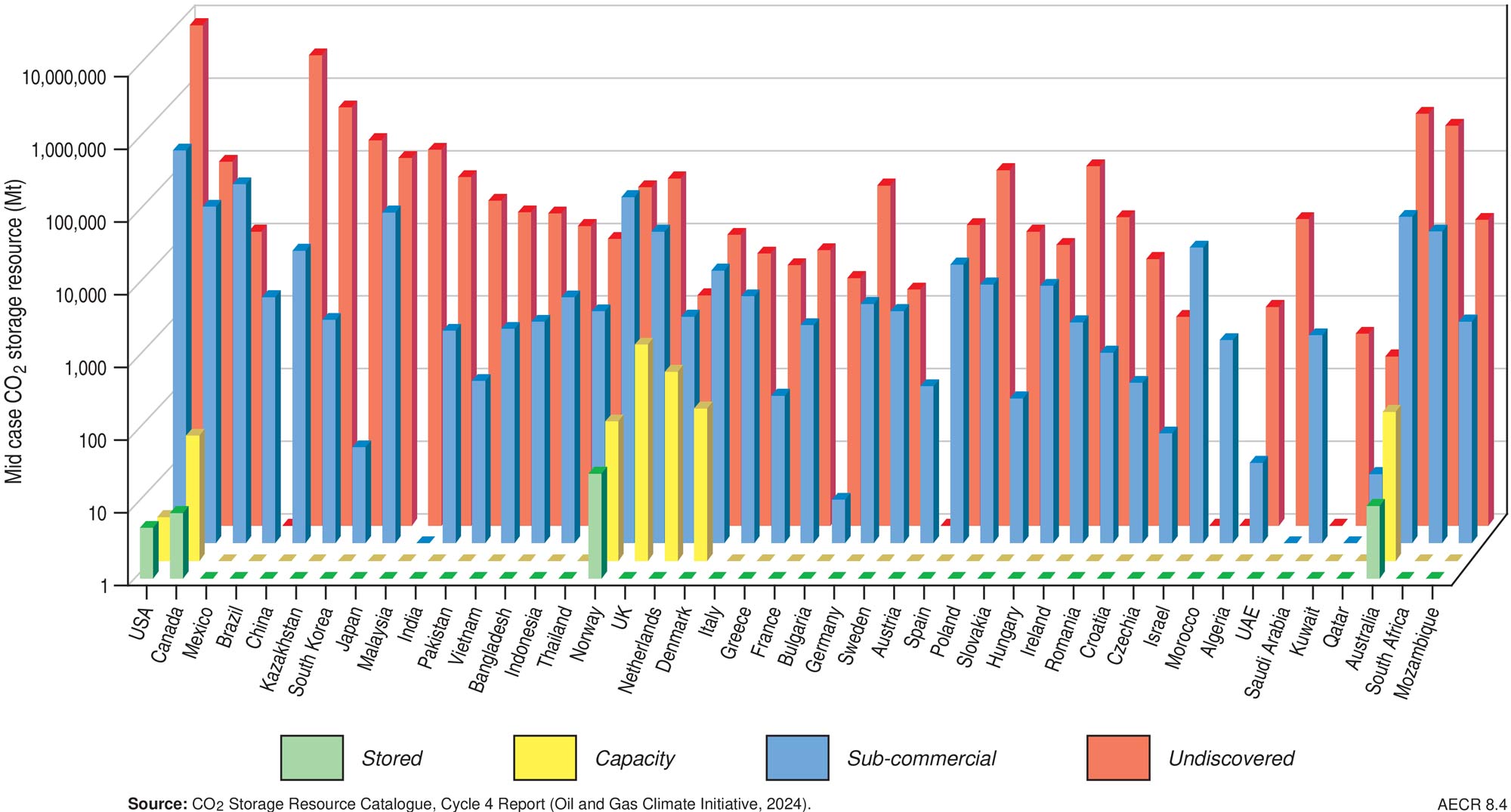
Figure 8.4 Plot of CO2 storage resources by country and CO2 Storage Resources Management System (SRMS) maturity (modified from Oil and Gas Climate Initiative (2024) Fig. 1-2, with updated Stored and Capacity estimates for Australia).
To date, the Moomba CCS, Cliff Head CCS, WA-481-P CCS and South Erregulla projects have publicly announced their 2P storage capacity (reserves) and/or 2C (contingent) storage resources (Table 8.2; Beach Energy Limited, 2024; Santos Limited, 2024; Pilot Energy 2024; Strike Energy, 2024). Additionally, the Gorgon CCS Project (Chevron, 2024) and CarbonNet Project (Victoria State Government, 2024) have publicly announced storage resources estimates, deemed to be the equivalent to a 2P storage capacity and 2C storage resource, respectively. Woodside Energy Limited detailed a maximum storage amount of 145 Mt for the Calliance Storage Formation (Browse CCS), deemed equivalent to a 2C storage resource, reported in the Declaration of Identified Greenhouse Gas Storage Formation (NOPTA, 2025b).
Table 8.2 Australia’s carbon dioxide geological storage reserves and resources to end June 2024.
Basin | Project | Storage Type | Carbon dioxide geological storage | Owners | |
|---|---|---|---|---|---|
| 2P Capacity (Mt) | 2C Resources (Mt) | ||||
| Barrow (Sub-basin) | Gorgon CCS | Saline aquifer | 100 | -- | Chevron Australia; ExxonMobil; Shell; Osaka Gas; Tokyo Gas; JERA |
| Browse | Browse CCS |
Depleted field, saline aquifer | -- | 145 | Woodside Energy Limited |
| Gippsland | CarbonNet | Saline aquifer | -- | 168 |
Victorian Government; Australian Government |
| Cooper | Moomba CCS | Depleted field | 13 | 198 |
Beach Energy Limited; Santos Energy Limited |
| Perth | Cliff Head CCS | Depleted field | -- | 45.6 |
Pilot Energy Limited; Strike Energy Limited |
| Perth | South Erregulla | -- | -- | 4.8 | Strike Energy Limited |
| Total | 113 | 561 | |||
Abbreviations
Mt = Million tonnes.
Notes
Identified storage resources, for the purposes of this report, are the equivalent of discovered 2P storage capacity and 2C contingent storage resources in the SPE-CO2 storage resources management system (SRMS; SPE, 2025). Estimates reported at various dates between June 2023 and June 2024. Sources: Beach Energy (2024); Chevron (2024); NOPTA (2024); Pilot Energy (2024); Santos Energy (2024); Strike Energy (2023, 2024); Victoria State Government (2024).
References
AspiraDAC, 2023. AspiraDAC (Last accessed March 2025).
Beach Energy Limited, 2024. Annual Report 2024
Chevron Australia, 2024. Gorgon carbon capture and storage fact sheet.
Chevron Australia, 2025. Gorgon carbon capture and storage (Last accessed August 2025).
DeepC Store, 2024. CStore1 (Last accessed June 2025).
DCCEEW (Department of Climate Change, Energy, the Environment and Water), 2023. Safeguard Mechanism.
DCCEEW (Department of Climate Change, Energy, the Environment and Water), 2024. Offshore carbon capture and sequestration (Last accessed June 2025)
DISR (Department of Industry, Science and Resources), 2024. Future Gas Strategy. Canberra, Australia.
GCSI (Global CCS Institute), 2024. Global Status of CCS: 2024. Australia.
Geoscience Australia, 2025. Australian CCS Projects Dataset, eCat# 150569.
IEA (International Energy Agency), 2022. Direct Air Capture: a key technology for net zero. IEA, Paris.
IEA (International Energy Agency), 2024c. CO2 Capture and Utilisation: Direct Air Capture. IEA, Paris. (Last accessed June 2025)
IEA (International Energy Agency), 2025. CCUS Projects Database. IEA, Paris. (Last accessed July 2025)
NOPTA (National Offshore Petroleum and Titles Administrator), 2025a. National Electronic Approvals Tracking System (NEATS), Department of Industry, Science and Resources (Last accessed August 2025).
NOPTA (National Offshore Petroleum and Titles Administrator), 2025b. The Register of identified greenhouse gas storage formations, Department of Industry, Science and Resources (Last accessed August 2025).
Oil and Gas Climate Initiative, 2024. CO2 storage resource catalogue, cycle 4 report.
Pilot Energy, 2024. Major increase to Cliff Head Carbon Storage Resource, Announcement to ASX 1 July 2024.
Santos Limited, 2024. Reserves Statement 2023
Santos Limited, 2025. 2025 Second Quarter Report
Strike Energy Limited, 2024. Annual Report 2024 (last accessed July 2025)
SPE (Society of Petroleum Engineers), 2025. CO2 Storage Resources Management System. ISBN 978-1-61399-955-4.
Victoria State Government Department of Jobs, Skills, Industry and Regions, 2024. About the CarbonNet Project (Last accessed July 2025).
Data download
Data tables and full report are downloadable from the Geoscience Australia website.